
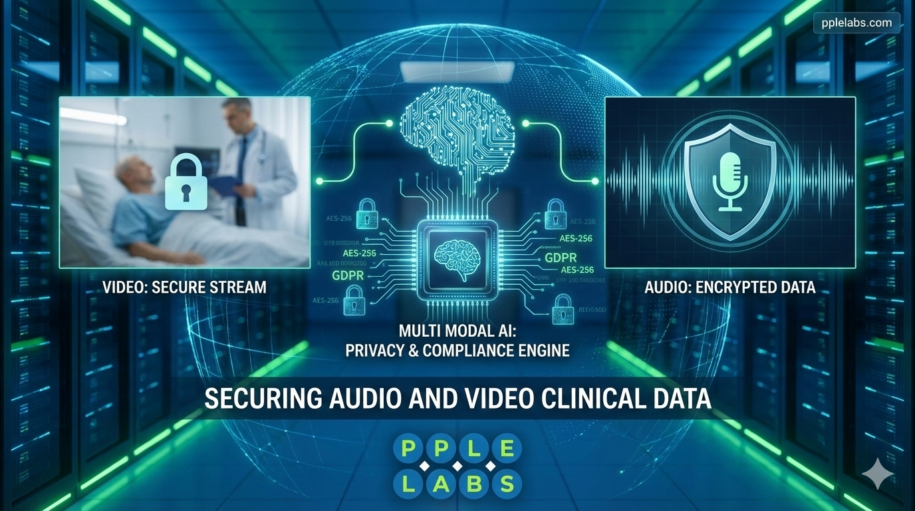
Multi Modal AI Privacy is the most important shield we have for protecting complex medical information in the modern era. Think about the last time you visited a clinic. You likely saw cameras for security and heard the soft beep of monitors. Today, those devices do more than just record. They listen, watch, and learn. While this helps doctors save lives, it also creates a massive target for digital thieves. If we do not protect these audio and video streams, we risk losing the trust that keeps the patient and doctor relationship alive.
1. The Critical Need for Multi Modal AI Privacy in 2026
Modern medicine is moving faster than ever before. Hospitals are now full of smart assistants that use Medical LLM Security to process notes and voice commands. However, as we add more ways for AI to “see” and “hear” patients, the surface area for attacks grows. Multi Modal AI Privacy is not just a fancy term. It is a necessary response to the fact that clinical data is no longer just words on a page. It is a constant stream of faces, voices, and heartbeats.
Why does this matter so much right now? In 2026, we are seeing a surge in ambient listening tools. These tools record entire doctor visits to create notes automatically. If a hacker gets into that stream, they do not just get a name. They get the actual voice and emotional state of a patient. This makes securing medical devices a top priority for every IT team in the country. Without a focus on Multi Modal AI Privacy, the very tools meant to help clinicians could become tools for surveillance.
2. Defining Multi Modal AI Privacy for Medical Environments
When we talk about Multi Modal AI Privacy, we are looking at how different types of data work together. Traditional AI usually looks at one thing at a time, like text or an image. Multi modal systems are different. they combine these things to get a better picture of what is happening. For example, an AI might watch a video of a patient walking and listen to their breathing to predict a fall.
This complexity is a double edged sword. It gives us better insights but makes anonymization much harder. You cannot just delete a name from a video. You have to think about the face, the background, and even the unique way a person moves. This is where the IoMT imperative comes in. We need to build security into every sensor from the very beginning. Multi Modal AI Privacy acts as the glue that keeps these different data types safe while they travel from the bedside to the cloud.
3. Securing Audio Data Streams with Multi Modal AI Privacy
Voice data is incredibly personal. It contains more than just words. It holds clues about age, gender, and even neurological health. Because of this, Multi Modal AI Privacy must treat audio as a high risk asset. When a doctor uses a digital scribe, that audio stream is a goldmine for attackers. We must ensure that the audio is encrypted the moment it leaves the microphone.
Using Multi Modal AI Privacy for audio means more than just locking the file. It means using active noise cancellation for privacy. Imagine a system that can strip out the voices of people in the hallway while keeping the doctor and patient clear. This is a form of non text data anonymization that is vital for maintaining a quiet and secure environment. It ensures that the AI only hears what it needs to hear.
4. Challenges in Non Text Data Anonymization for Audio
Have you ever tried to hide a voice without making it sound like a robot? It is not easy. Standard techniques often fail because they remove too much useful information. In the world of Multi Modal AI Privacy, we need a balance. We want to keep the clinical data but lose the identity. This is why researchers are working on voice synthesis that keeps the tone and medical content but changes the unique signature of the speaker.
Another big hurdle is background noise. Sometimes, a TV in a patient room might play a news report that reveals the date or location. Multi Modal AI Privacy tools must be smart enough to recognize and scrub these accidental identifiers. If the AI is not trained to spot these clues, the audio could still lead back to the patient. We must follow strict AI governance for healthcare to ensure these tools are tested against every possible leak scenario.
5. Multi Modal AI Privacy for Video Based Clinical Surveillance
Video is perhaps the most sensitive data type in any hospital. It records physical movements, facial expressions, and even the layout of a room. Using Multi Modal AI Privacy in video surveillance is about more than just blurring faces. It is about ensuring the system only captures what is medically relevant. If a camera is monitoring a patient for seizures, does it need to see the family photos on the bedside table? Probably not.
By applying Multi Modal AI Privacy, we can use edge computing to process video locally. This means the raw video never actually leaves the room. Instead, the AI only sends a message saying “the patient is safe” or “a fall occurred.” This minimizes the risk of a massive data breach. Protecting these streams is a core part of managing top cybersecurity risks because video data is so valuable on the dark web.
6. Technical Methods for Clinical Surveillance Security in Video
How do we actually achieve this level of security? One way is through dynamic blurring. As a person moves through a room, the AI follows them and blurs their face in real time. But Multi Modal AI Privacy goes further. We can also use “skeletonization.” This turns the person into a simple stick figure. The AI can still see if the person falls, but it has no idea what they look like.
Another method involves differential privacy. This adds a layer of mathematical “noise” to the data. It makes it impossible to pinpoint a specific individual while still allowing the AI to see broad trends. This is the gold standard for Multi Modal AI Privacy. It allows researchers to use the data without ever putting a single patient at risk. You can find more about these frameworks through the NIST AI Risk Management Framework, which provides a great roadmap for safe implementation.
7. Navigating HIPAA Compliance with Multi Modal AI Privacy
Everyone in healthcare knows the name HIPAA. It is the law that keeps our medical secrets safe. However, the HHS HIPAA guidelines were written before AI could watch us in our sleep. This creates a gap that Multi Modal AI Privacy must fill. To stay compliant, hospitals must ensure that every piece of audio and video is treated as protected health information.
Compliance is not a one time check. it is a constant process. You need to have audit logs for who sees the data and why. If an AI model is trained on video data, you must prove that the data was anonymized correctly. Using Multi Modal AI Privacy helps you automate these reports. It gives you a clear trail of evidence that you are following the rules. This is especially important when you are dealing with supply chain security and outside vendors.
8. Preventing Shadow AI Risks in Multi Modal Data Processing
One of the biggest threats to Multi Modal AI Privacy is not a hacker. It is a tired doctor. Imagine a clinician who wants to analyze a patient video quickly and uses a free online tool to do it. This is a classic example of shadow AI risks. That video is now on a public server, and the hospital has lost control of it.
To stop this, we need to provide better, safer tools. We must educate staff on why Multi Modal AI Privacy is so critical. If they understand that a “quick clip” could lead to a million dollar fine, they are more likely to follow the rules. Using active monitoring can help catch these mistakes before they become disasters. It is like having a digital guardian watching over the data flow.
9. Future Directions for Multi Modal AI Privacy in Healthcare
What does the future hold? We are moving toward a world where AI is invisible but everywhere. We will see smart bandages that send video of wounds and beds that listen for signs of distress. In this world, Multi Modal AI Privacy will be the most valuable asset a hospital owns. It will be the foundation of “Privacy by Design,” where security is not an afterthought but a core feature.
We might even see “Zero Knowledge” AI. This would allow an AI to learn from data without ever actually seeing it in an unencrypted state. This would be the ultimate victory for Multi Modal AI Privacy. It would allow for total medical innovation without a single sacrifice in patient confidentiality. As we look toward the next decade, the focus will shift from just gathering data to protecting the human behind the data.
Conclusion
Securing clinical data is no longer just about passwords and firewalls. It is about understanding the deep connection between different types of information. Multi Modal AI Privacy provides the framework we need to embrace the future of medicine without losing our right to privacy. By focusing on non text data anonymization and robust clinical surveillance security, we can build systems that are both smart and safe. Whether it is through skeletonizing video or encrypting audio at the source, the goal remains the same. We must protect the patient at every turn. Are you ready to upgrade your hospital security for the age of multi modal intelligence?
Frequently Asked Questions
1. What exactly is Multi Modal AI Privacy in a hospital setting? It is the practice of securing diverse data types like audio, video, and text simultaneously. It ensures that when these different sources are combined by AI, the patient identity remains protected through encryption and anonymization.
2. How does Multi Modal AI Privacy handle video data differently than text? Video data is much harder to hide. While you can delete a name from text, video requires tools like face blurring or turning people into digital skeletons to ensure the person cannot be identified while the AI still monitors their movements.
3. Is Multi Modal AI Privacy required for HIPAA compliance? Yes, because audio and video captured in a clinical setting are considered protected health information. If an AI system processes this data, it must follow all HIPAA rules for security, access control, and data de-identification.
4. Can Multi Modal AI Privacy prevent hackers from stealing voice data? By using end to end encryption and scrubbing unique vocal markers, these systems make stolen data useless to hackers. Even if they get the file, they cannot link the voice to a specific individual or hear the original conversation.
5. What are the best tools for implementing Multi Modal AI Privacy? The best approach involves using a mix of edge computing, differential privacy, and dedicated medical AI platforms that are built with security as a priority. Following frameworks like the NIST AI RMF is also a great way to start.
Would you like me to create a technical checklist for your IT team to audit your current multi modal data streams?
Leave a Reply