
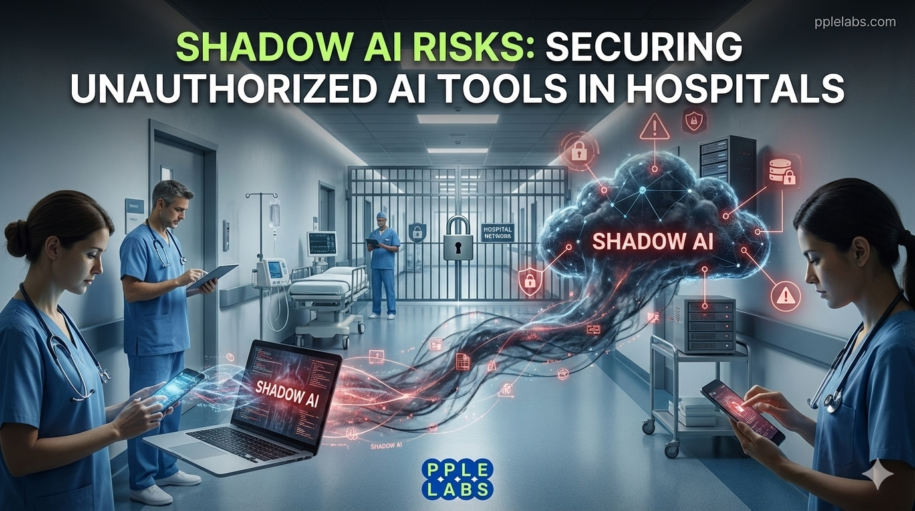
Shadow AI Risks are no longer a distant concern for hospital administrators. They are here right now. Imagine a busy doctor who feels buried under a mountain of notes. They want to help their patients faster. So they open a browser window and paste sensitive clinical data into a free AI tool to summarize it. It sounds like a great solution for efficiency. But what happens to that data once it leaves the hospital network? This is the core of the problem. Unauthorized AI usage is spreading through clinics like a quiet virus.
In this article, we will look at how these unvetted tools put your facility at risk. We will also discuss the steps you can take to bring these “shadow” tools into the light. Securing your network does not mean stopping innovation. It means making sure that innovation happens safely and legally.
Defining the Shadow AI Risks Landscape
Before we can fix the problem, we need to understand it. What exactly are we dealing with when we talk about unauthorized AI?
1. Why Medical Staff Turn to Unvetted AI
Medical professionals are facing record levels of burnout. They are looking for any tool that can give them back a few minutes of their day. Often, the hospital’s official software is slow or difficult to use. HIPAA Journal recently reported that outdated technology is a major driver of this stress. When official systems fail, staff find their own solutions. They use generative AI to write emails, explain complex terms to patients, or organize schedules. They do not mean to cause harm. They just want to do their jobs well. However, this creates Shadow AI Risks because the IT department has no visibility into what information is being shared. It is like leaving the hospital’s back door wide open while everyone is looking at the front gate.
2. The HIPAA Gap and Patient Privacy Concerns
The biggest danger involves Protected Health Information or PHI. Most free AI platforms are not built for healthcare. They do not have the same protections as a HIPAA compliant environment. When a nurse or doctor uploads a patient history into a public model, that data might be used to train the AI. This means sensitive details could potentially surface in someone else’s search result. This is a massive violation of privacy laws. The IBM Cost of a Data Breach Report shows that healthcare remains the most expensive industry for data leaks. Shadow AI Risks add an extra layer of danger because these breaches are harder to detect and contain. You cannot fix a leak if you do not know the pipe exists.
Detecting Shadow AI Risks Within Clinical Workflows
You cannot secure what you cannot see. Detection is the first step in any healthcare cybersecurity plan.
3. Monitoring Data Exfiltration Points in Hospitals
Your IT team needs to look for patterns in network traffic. Are there a lot of requests going to unknown AI websites? Large uploads to external servers can be a red flag. By using advanced AI cybersecurity tools, you can spot these anomalies in real time. These systems act like a digital security camera. They watch for data leaving the network and alert you if something looks wrong. You should pay close attention to workstations in clinical areas. These are the most likely spots for Shadow AI Risks to emerge.
4. Identifying Third Party Vulnerabilities in AI Tools
Many AI applications are built on top of other software. This creates a chain of risk. Even if the tool itself looks safe, the way it handles data might not be. This is especially true for the Internet of Medical Things. Some medical devices now come with AI features that were not explicitly vetted by your hospital. These “built in” tools can bypass your standard security checks. To mitigate Shadow AI Risks, you must conduct a thorough audit of every vendor and software package used in your facility. According to HHS security guidance, regular risk assessments are not just a good idea, they are a legal requirement.
Mitigating Shadow AI Risks Through Governance
Once you have identified the holes, it is time to plug them. Governance is about setting the rules of the road.
5. Establishing Clear Usage Policies for Staff
Your staff needs to know what is allowed and what is not. A vague “do not use AI” policy usually fails. Instead, create a clear list of approved tools. Explain the “why” behind the rules. Let them know about the specific Shadow AI Risks like data poisoning or privacy leaks. If you keep the conversation open, staff are less likely to hide their usage. Policies should be easy to read and updated often as the technology changes. Remember that a policy is only as good as its enforcement. Use technical blocks to prevent access to high risk sites while keeping the door open for safe experimentation.
6. Providing Approved Alternatives to Combat Burnout
The best way to stop unauthorized usage is to provide a better, safer option. If staff are using AI to manage notes, give them a clinical digital assistant. These tools are designed specifically for medicine. They offer the same efficiency benefits without the Shadow AI Risks. When you provide a secure alternative, the “shadow” tools naturally lose their appeal. Investing in future medicine technology like AGI can transform your hospital. It moves your team from using risky workarounds to utilizing high performance, vetted systems.
The Human Element of Shadow AI Risks
Technology alone cannot solve a people problem. You must address the culture within your hospital.
7. Education and Awareness Programs for Doctors
Most medical staff are not tech experts. They might not realize that pasting a note into a chat box is the same as posting it on a public forum. Education is your strongest weapon against Shadow AI Risks. Run regular workshops. Use real life analogies to explain the stakes. Tell them that using unvetted AI is like giving a stranger the keys to the pharmacy. It might be faster than waiting for the official locksmith, but the consequences could be devastating. When doctors understand the personal risk to their patients and their licenses, they become your best allies in security.
Future Proofing Hospital Security
The world of AI is moving fast. Your security strategy must keep up.
8. Adopting NIST and ISO Standards for AI Safety
Frameworks are your best friend here. The NIST AI Risk Management Framework provides a structured way to handle these challenges. It helps you map, measure, and manage Shadow AI Risks across your entire organization. Using a globally recognized standard ensures that you are not missing any critical steps. It also shows regulators that you are taking a proactive approach to security. This level of diligence builds trust with both patients and staff.
9. Integrating Agentic AI for Active Oversight
In the future, AI will likely be the one watching the AI. We call this “Agentic AI.” These are digital agents that can monitor workflows and intervene when they see a policy violation. Instead of a static firewall, you have an intelligent system that understands the context of a doctor’s work. It can catch Shadow AI Risks before they lead to a breach. This creates a resilient ecosystem where technology protects itself. By embracing these advanced tools, you turn a major vulnerability into a competitive advantage for your hospital.
Conclusion
Managing Shadow AI Risks is a marathon, not a sprint. It requires a balance of strict security and supportive innovation. You cannot simply ban AI because it is too valuable for modern medicine. Instead, you must guide its use. By detecting unauthorized tools, educating your staff, and providing safe alternatives, you can protect your patients and your hospital. The goal is to move from a state of “shadow” to a state of transparency. When everyone works together, AI becomes a powerful partner rather than a hidden danger.
Frequently Asked Questions (FAQs)
1. What are the most common Shadow AI Risks in a clinical setting?
The most common risks include patient data leaks through public chat bots and the use of unvetted diagnostic tools that may give inaccurate results. These tools often lack the security protocols required by federal laws.
2. How can I tell if my staff is using unauthorized AI?
You can look for spikes in traffic to known AI websites or use endpoint monitoring software to see what applications are running on hospital devices. Regular surveys and open discussions with staff can also reveal where they feel the current systems are failing them.
3. Does banning AI solve the problem of Shadow AI Risks?
No, banning usually leads to staff hiding their usage. A better approach is to provide secure, hospital approved AI tools that meet clinical needs without compromising safety.
4. Are there specific HIPAA penalties for Shadow AI Risks?
Yes, if unauthorized AI usage leads to a breach of PHI, hospitals can face significant fines. These penalties can range from thousands to millions of dollars depending on the level of negligence.
5. Can Agentic AI help in managing these vulnerabilities?
Absolutely. Agentic AI can monitor clinical workflows in real time and flag unauthorized tool usage. This allows IT teams to respond quickly and provide staff with the correct, safe alternatives.
Would you like me to create a checklist for your hospital’s IT team to begin auditing these AI tools?
Leave a Reply