
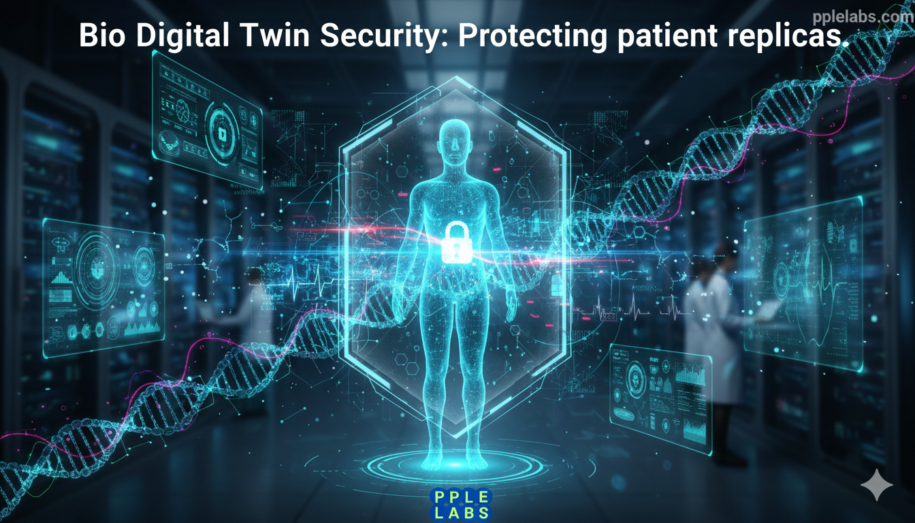
Bio Digital Twin Security is the most critical wall standing between your most intimate medical data and those who want to exploit it. Imagine having a digital twin that mirrors your heart, your DNA, and even your metabolism in real time. This is not science fiction anymore. Doctors use these replicas to test surgeries or predict how a new drug might affect you. But here is the catch. If someone steals that digital version of you, they do not just have your name or address. They have your entire biological blueprint.
Bio Digital Twin Security focuses on making sure these virtual mirrors stay private and safe. As we move into an era where medicine is tailored specifically for you, the data that feeds these models becomes incredibly valuable. We are talking about a level of detail that traditional medical records cannot match. Protecting this information requires more than just a simple password. It requires a fundamental shift in how we think about healthcare technology and patient privacy.
1. What exactly is Bio Digital Twin Security for patient replicas?
Before we dive into the deep end, let us clarify what we are protecting. A bio digital twin is a living computer model of a human being. It uses data from genetic tests, wearable sensors, and medical imaging to create a virtual person. This replica changes as you change. If you eat a burger or run a marathon, your twin updates to reflect the biological shift. Because these models are so accurate, they are perfect for testing new treatments.
Bio Digital Twin Security is the set of protocols designed to keep these replicas from falling into the wrong hands. It is like having a high tech vault for a digital clone of your body. Without strong security, these replicas could be used to predict your future health risks or even deny you insurance based on a simulated outcome. This is why we must treat these digital assets with the same level of care as the physical patients they represent. You can learn more about how these models work in our guide on the AI digital twin and its role in simulation.
2. Why Bio Digital Twin Security is a primary target for hackers
You might wonder why a hacker would want a digital model of your liver or your nervous system. The answer is simple. Biological data is the new gold. In the wrong hands, this information can be used for sophisticated blackmail, corporate espionage, or even creating bioweapons. Because these twins are dynamic, they provide a constant stream of fresh data, making them much more attractive than a static medical file.
2.1 Specific vulnerabilities in dynamic biological data
One of the biggest headaches in Bio Digital Twin Security is the constant flow of information. These replicas rely on a continuous stream of data from wearables in preventive healthcare. Every time your smartwatch syncs your heart rate, it creates a potential entry point for an attacker. These many connections, often called the attack surface, make it much harder to seal every door. If a single sensor is compromised, the integrity of the entire digital twin is at risk.
2.2 The risk of genetic profiling and identity theft
Identity theft used to mean someone stole your credit card number. Now, it could mean someone stole your genetic code. Bio Digital Twin Security must address the fact that biological data is permanent. You can change a password or a bank account, but you cannot change your DNA. If a patient replica is breached, that person is exposed for life. This level of risk is why researchers are pushing for ethical and quality governance in digital health twins.
3. The role of Bio Digital Twin Security in personalized medicine
Personalized medicine is the dream of every doctor. It is the ability to give the right drug to the right person at the right time. But this dream relies entirely on trust. If patients do not believe their replicas are safe, they will not share the data needed to build them. Bio Digital Twin Security is the engine that makes personalized nutrition and genomics possible.
When security is done right, it allows for a seamless exchange of data between patients and researchers. This trust is essential for advancing fields like precision oncology. For instance, tools like PathAI help analyze pathology images, but they require secure environments to operate ethically. Without robust Bio Digital Twin Security, the entire movement toward personalized care could stall because of privacy fears.
4. How cryptographic replicas enhance Bio Digital Twin Security
So how do we actually fix this? One of the most promising solutions is the use of cryptographic replicas. Instead of storing a raw digital model of a patient, we store an encrypted version that can only be used under very specific conditions. This means even if a hacker gets into the server, they only see a garbled mess of numbers instead of your medical profile.
4.1 Implementation of Zero Trust architectures
In the world of Bio Digital Twin Security, the old rule of trust but verify is dead. We have moved to a Zero Trust model. This means that no user or device is trusted by default, even if they are already inside the hospital network. Every request to access a patient replica must be authenticated and authorized. This approach is vital for agentic AI healthcare workflows where digital agents are moving data between systems. By assuming that a breach is always possible, we can build much stronger defenses.
4.2 Leveraging blockchain for biological data ownership
Who really owns your digital twin? This is a massive debate in the tech world. Some argue that the hospital owns it, while others say the patient should have total control. Bio Digital Twin Security can use blockchain technology to create a clear audit trail of who accessed the data and when. This creates a decentralized system where the patient holds the digital keys. For more on the ethics of data ownership, it is worth looking at how modern frameworks are being built to protect individual rights.
5. Ensuring Bio Digital Twin Security in clinical research
Clinical trials are becoming more digital and more complex. Researchers use replicas to simulate how a diverse group of people might react to a new vaccine or treatment. While this saves time and lives, it also concentrates a massive amount of sensitive data in one place. Bio Digital Twin Security must be a top priority from the very first day of a research project.
5.1 Managing dynamic consent frameworks for replicas
Traditional consent forms are often a one and done deal. You sign a paper, and the hospital uses your data forever. But a digital twin is living data. Bio Digital Twin Security requires a dynamic consent framework. This means you can change your mind. Maybe you want to share your heart data for research but keep your genetic data private. Dynamic consent allows patients to manage these permissions in real time, ensuring that their replica is only used in ways they approve of. This is a core part of the NIST guidelines on digital twin trust.
6. The future landscape of Bio Digital Twin Security
As we look toward the future, the technology will only get more sophisticated. We are seeing the rise of AGI in healthcare, which will make these patient replicas even more intelligent and predictive. This means Bio Digital Twin Security will have to evolve just as fast. We might see AI security systems that can detect a hack before it even happens by noticing tiny irregularities in how a replica is behaving.
The goal is to reach a point where Bio Digital Twin Security is invisible but invincible. We want a world where doctors can use these incredible tools to save lives without ever putting patient privacy at risk. This will require global cooperation and strict standards like those being discussed in IEEE cybersecurity reviews. It is a long road, but the prize is a healthcare system that is truly personalized and perfectly secure.
Conclusion
Bio Digital Twin Security is not just a technical challenge. It is a moral imperative. As we create digital versions of ourselves to improve our health, we must ensure those versions are protected with the highest level of care. From using blockchain for ownership to implementing Zero Trust architectures, the tools are there. The question is whether we will prioritize privacy as much as we prioritize innovation. By focusing on Bio Digital Twin Security today, we are protecting the patients of tomorrow.
Frequently Asked Questions
- What is the main goal of Bio Digital Twin Security? The primary goal is to protect the sensitive biological data used to create digital replicas of patients. This ensures that personal information like DNA and real time health vitals are not misused or stolen.
2. How does a digital twin differ from a regular medical record? A medical record is a static history of what happened. A digital twin is a dynamic, living model that uses real time data to predict what might happen in the future. This makes Bio Digital Twin Security much more complex than standard record keeping.
3. Can blockchain actually help with patient privacy? Yes. Blockchain can create an unchangeable record of who accessed a patient replica. It also allows patients to hold the keys to their own data, giving them more control over their biological information.
4. What is dynamic consent in the context of digital twins? Dynamic consent allows a patient to change their data sharing preferences at any time. Instead of a one time signature, it is a continuous conversation between the patient and the healthcare provider.
5. Are digital twins already being used in hospitals? They are currently used primarily in high level research and specialized clinics for precision medicine. However, their use is growing rapidly as AI and sensor technology become more affordable and accurate.
Leave a Reply