
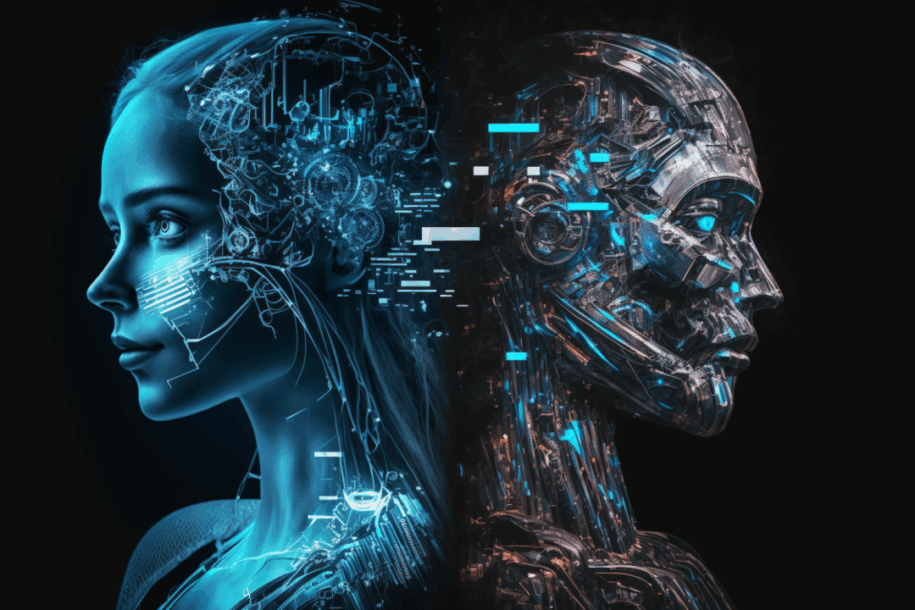
Have you ever felt like your treatment plan was a bit of a guesswork? It’s a common feeling, because for too long, medicine has relied on averages and generalized protocols. You and I know that our bodies are unique, and a treatment that works wonders for one person might barely help the next. Now, what if your doctor could, with 100% confidence, know exactly how you’d respond to a new medication or a complex surgery before you even entered the operating room? That incredible ability is arriving, and it’s all thanks to the AI Digital Twin.
This powerful technology is more than just a buzzword; it’s a living, computational replica of a person, an organ, or a disease that is constantly updated with real time data from your physical body. It’s the engine driving the true shift toward personalized medicine. The AI Digital Twin is set to make the one size fits all approach a thing of the past, making healthcare safer, more precise, and finally, truly individual.
1. Defining the AI Digital Twin in Healthcare
To truly grasp the transformative potential here, we need to understand what an AI Digital Twin actually is when we talk about human health. This isn’t just a simple computer program; it’s a dynamic, predictive powerhouse.
1.1 The Core Components of Your Virtual Replica
Think of your twin as a virtual mirror of your body, built on layers of deeply personal data. This includes your genetic information, every line of your electronic health record, high resolution imaging like MRIs, and continuous data streams from wearables like smartwatches and medical sensors. Artificial Intelligence algorithms take this massive, complex data and fuse it together, creating a functional, simulated version of your unique physiology. It’s this combination of real time data and machine learning that lets the twin accurately reflect the current state of your body and predict its future behavior, a concept foundational to the technology, as explored by IBM.
1.2 Why AI Digital Twin is Not Just a Simple Model
Why do we need the AI part? Without it, the digital twin would just be a static model, incapable of learning and adapting. AI, particularly machine learning, is what gives the twin its intelligence. It allows the virtual copy to process the torrent of incoming data, identify subtle patterns invisible to humans, and then use those insights to run sophisticated simulations. This means the AI Digital Twin isn’t just showing you what is; it’s predicting what will be if you change a variable, like a dose of medicine or a type of exercise. It’s the difference between looking at a photograph and watching a movie of your health.
2. Revolutionizing Personalized Medicine
For years, doctors have dreamed of truly personalized medicine, but the sheer complexity of the human body made it a monumental challenge. The AI Digital Twin is finally bridging that gap, taking us from theoretical hope to clinical reality.
2.1 Personalized Treatment Planning with AI Digital Twin
The most significant benefit is the ability to move beyond generalized treatment protocols. Instead of prescribing a drug based on what works for the average patient, doctors can use your AI Digital Twin to simulate how five different treatment options would impact you specifically. This dramatically reduces the trial and error phase that can be so exhausting and even dangerous for patients. By integrating genomics and clinical data, these models enable a new chapter in individualized medicine, a crucial step in the evolution of care, a change necessary to address The Urgent Need for Personalized Healthcare.
2.2 Optimizing Drug Development and Dosage
Drug development is notoriously long, expensive, and risky. Nine out of ten experimental drugs fail in clinical trials. The AI Digital Twin offers a way to de risk this process by allowing pharmaceutical companies to run virtual clinical trials on a large scale of anonymized twins. More importantly, for an individual, the twin can be used to forecast the precise dose of an existing drug that will be most effective while minimizing side effects. You can read more about how AI specifically helps to fine tune care in posts discussing how machine learning can help optimize existing drug dosages to minimize side effects. The twin eliminates guesswork and ensures treatment is precise down to the molecular level.
3. The Power of Simulation: Treatment and Prediction
The true magic of this technology lies in its ability to simulate highly complex scenarios, giving us a window into the future of a patient’s health trajectory.
3.1 Pre-Surgical Planning and High Risk Interventions
Imagine a surgeon needing to perform a delicate procedure on the brain. Instead of relying solely on static images, they can first perform the entire operation on the patient’s AI Digital Twin, which accurately models the elasticity of the tissue and the impact of the tools. This rehearsal allows them to anticipate complications, perfect their technique, and identify the optimal approach before the real surgery begins. This level of simulation is invaluable for high risk procedures and even for advancing the understanding of neurological diseases, as is being done with the development of Digital Twins of the human brain.
3.2 Forecasting Disease Progression and Trajectories
One of the most life changing applications is the ability to look ahead. For patients with chronic conditions like diabetes or heart failure, the AI Digital Twin acts as a powerful predictive tool. It can simulate how a disease might progress over the next five years based on a patient’s current lifestyle, or, conversely, how effective a proposed change, like a new diet or medication, would be at slowing or reversing the condition. This predictive modeling for disease risk requires a solid foundation of data and advanced mathematical modeling to be accurate. It allows for a genuinely proactive approach to care. This capability extends to managing diseases like cancer, a critical area where this technology is making great strides, as we explore in Advancing Precision Oncology with Digital and Virtual Twins.
4. Technical and Ethical Realities of AI Digital Twin
The adoption of such a powerful technology isn’t without its challenges, primarily centered on data integrity and patient trust.
4.1 Data Security, Privacy, and the Need for Trust
The level of detail required for an effective AI Digital Twin means we are handling the most sensitive personal information imaginable, including genomics and real time vitals. This necessitates the highest standards of data security and strict compliance with privacy regulations. Beyond security, we must ensure the algorithms themselves are ethical. We need to prevent algorithmic bias, which could lead to a situation where the twin provides less accurate predictions for certain demographic groups. The entire framework of Human Digital Twins in Personalized Healthcare, must be built on a foundation of trust and transparency. Addressing these technical and ethical realities is what will make this technology mainstream, as noted by researchers discussing the future of Digital Twins in Healthcare.
5. Conclusion: Engineering a Healthier Future
The AI Digital Twin is not just an incremental improvement in medical technology; it represents a foundational shift in how we understand and manage human health. By allowing us to simulate life and disease in a risk free virtual environment, this technology empowers doctors with predictive power that was unimaginable just a decade ago. It delivers on the promise of truly personalized medicine, moving us beyond generalized treatments to interventions tailored to the molecular blueprint of each patient.
We are entering an era where healthcare is proactive, precise, and deeply personal. The virtual patient is here, and it is set to engineer a healthier future for all of us. As the technology continues to expand, it will transform fields from oncology to rehabilitation, as seen in the Applications of AI-Based Patient Digital Twins in Decision Support in Rehabilitation and Physical Therapy, ultimately ensuring that your treatment plan is as unique as you are.
Frequently Asked Questions (FAQs)
Q1. How does the AI Digital Twin predict how a drug will affect me?
The AI Digital Twin simulates drug effects by combining pharmacological models with your specific genetic data. It analyzes how your unique set of enzymes and cell receptors will likely interact with the drug’s compounds. This predictive analysis allows the system to forecast the drug’s effectiveness and estimate potential side effects far more accurately than traditional methods.
Q2. Is an AI Digital Twin a static model that is built once and then used?
Absolutely not. The AI Digital Twin is designed to be dynamic and continuously updated. It’s constantly fed new data in real time from your physical counterpart, such as readings from wearable devices, new lab results, or imaging scans. The AI processes this information and updates the virtual model, allowing it to evolve and accurately reflect your current health status at any moment.
Q3. What is the role of genomics in creating a personalized AI Digital Twin?
Genomics is a core component. Your genetic makeup determines everything from your metabolism to your predisposition to certain diseases. Incorporating genomic data allows the AI Digital Twin to model your risk factors and, crucially, simulate how treatments and medications will be processed by your body on a molecular level, making care genuinely individualized.
Q4. Can this technology help in managing chronic diseases like diabetes or heart failure?
Yes, this is one of its most valuable applications. For chronic diseases, the AI Digital Twin can continuously monitor and simulate the long term impact of various factors, like changes in diet, exercise, or medication dosage. It can alert doctors to potential complications before they manifest, enabling proactive adjustments to the patient’s treatment plan. Research confirms this trend, as noted in studies on Digital Twins Generated by Artificial Intelligence in Personalized Healthcare.
Q5. How do doctors ensure the AI Digital Twin is safe and accurate for me?
Safety and accuracy are paramount. The twin is meticulously validated against existing clinical data and known biological principles. Furthermore, a human physician always retains final oversight. The AI Digital Twin acts as a highly advanced decision support tool, giving the doctor the best possible predictions and simulations to inform their final, personalized medical judgment.
Leave a Reply