
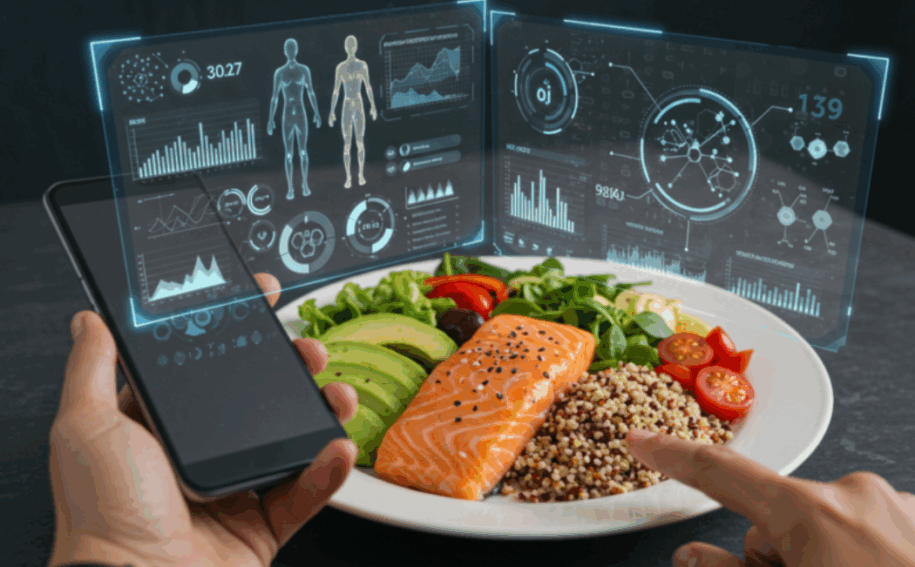
Have you ever wondered why that popular diet worked wonders for your friend but left you feeling sluggish and uninspired? The answer is simple yet profound: we are all genetically unique. For decades, public health efforts have relied on generalized dietary guidelines, essentially adopting a one-size-fits-all approach to food. However, the future of wellness and disease management lies in a far more tailored strategy. Enter AI in Personalized Nutrition, a groundbreaking field that promises to revolutionize how we eat. It’s about moving from broad recommendations to a precision plan based on your individual biological blueprint. We are talking about using your genetic code to create a dietary prescription so precise it can act as powerful preventative medicine.
The Genomic Blueprint: Understanding Nutrigenomics
To truly harness the power of AI in Personalized Nutrition, we must first dive into the fascinating world of nutrigenomics. It is the scientific foundation of this entire revolution.
1.1. The Science of Nutrigenomics: Connecting Genes and Food
Nutrigenomics is essentially the study of how food and its components affect gene expression. Think of your body as a sophisticated orchestra where your genes are the musical score. Nutrients, or lack thereof, act as the conductor, deciding which instruments (genes) play loudly and which remain silent. When we talk about Personalized Nutrition, we are asking: How does the spinach I eat, the coffee I drink, or the supplement I take change what’s happening inside my cells? This is where understanding your own genetic data becomes crucial for truly effective dietary therapy.
1.2. Single Nucleotide Polymorphisms (SNPs) and Dietary Response
One key element in this genetic puzzle is the Single Nucleotide Polymorphism, or SNP (pronounced “snip”). SNPs are common variations in your DNA sequence that make you unique. For example, a common SNP might determine whether your body efficiently metabolizes caffeine or not. You might have a genetic variant that makes you prone to higher homocysteine levels, a risk factor for heart disease, which can be mitigated with increased intake of B vitamins, like folate. This is the essence of Nutrigenomics: using this granular genetic information to predict and influence your body’s response to specific nutrients. It’s a critical layer of data for any AI-driven system aiming for genuine Precision Health.
2. The Role of AI in Personalized Nutrition: Analyzing Multi-omics Data
Here is where the artificial intelligence component steps in and transforms an interesting science project into a viable clinical tool. Genomics gives us the book, but AI in Personalized Nutrition gives us the capacity to read it.
2.1. From Raw Genomic Data to Precision Health Insights
A full genomic sequence contains billions of data points. A human being cannot possibly sift through all of that to create a daily meal plan. This is the ultimate Big Data problem, and it requires a Big Data solution: AI for Diet Recommendations. Machine Learning algorithms, particularly Deep Learning models, are perfectly suited to this task. They can ingest your raw genomic data, integrate it with data from other “omics” fields like metabolomics (what your body produces) and microbiome sequencing (your gut bacteria) and identify subtle, complex patterns that directly correlate with health outcomes or disease risk. This is the multi-omics data analysis that defines true next-generation Personalized Nutrition.
2.2. AI for Phenotyping: Moving Beyond Genetics Alone
Genetics are not destiny; they simply represent potential. To create a truly effective dietary therapy, an AI system can’t just look at your DNA. It must look at your phenotype, your observable characteristics which is a blend of your genes, your environment, and your lifestyle. This process, called AI-Driven Phenotyping, integrates everything from your real-time blood glucose monitor readings and sleep patterns to your personal food preferences and stress levels. It creates a dynamic “digital twin” of your metabolic self. This comprehensive model allows the AI in Personalized Nutrition system to generate dynamic, adaptive diet recommendations that change as your life or physiology changes. For example, a recommendation for you might not be static; it could shift if you’ve just run a marathon versus if you’ve been battling a stressful week at work.
You can see how complex this data processing becomes, which is why AI is the only way to deliver precision health at scale. The article titled “AI Digital Twin: Personalized medicine and treatment simulation” provides an excellent look at how these sophisticated models work.
3. AI-Driven Dietary Therapy for Chronic Disease Management
This is where the promise of AI in Personalized Nutrition truly shines, shifting the focus of nutrition from general wellness to specialized clinical treatment.
3.1. Treating Metabolic Syndrome and Diabetes
One of the most immediate applications of AI-driven dietary therapy is in managing metabolic diseases, such as Type 2 diabetes. By analyzing a patient’s genes for markers related to carbohydrate and fat metabolism, along with their continuous glucose monitoring data, AI can predict which foods will cause the most significant blood sugar spike for that specific person. This moves us away from generic “avoid sugar” advice to hyper-specific meal suggestions, like knowing that a certain type of whole-grain bread might be worse for a patient than an avocado. This type of tailored intervention is a massive leap forward in preventative medicine.
You might find it helpful to explore related technology like that discussed in “5 Applications of OpenAI’s AgentKit in Healthcare Automation” to see how AI is being used across healthcare.
3.2. Supporting Gastrointestinal Health and the Gut Microbiome
Your gut is often called your “second brain,” and your microbiome, the trillions of bacteria living there, is highly responsive to what you eat. AI plays a critical role in integrating your genomic data with the results of a microbiome analysis. An AI model can look at your specific microbial profile and recommend prebiotic or probiotic foods tailored to correct dysbiosis (an imbalance), which is linked to everything from irritable bowel syndrome to mood disorders. The recommendations become so precise that they target specific Micronutrient Metabolism pathways, making food a direct pharmaceutical-grade intervention.
4. Ethical and Practical Challenges in AI in Personalized Nutrition
While the technology is thrilling, we can’t ignore the speed bumps. The biggest challenge in scaling AI in Personalized Nutrition is data privacy. Genomic data is perhaps the most sensitive information a person possesses. We need robust ethical frameworks and sophisticated cybersecurity to protect this data from misuse. Furthermore, we must ensure the recommendations are interpretable. If the AI tells you to eat “food X” but can’t explain why based on your genes, both you and your doctor might be hesitant to follow it. This need for transparency is being addressed by new approaches like Explainable AI, as detailed in the article “Explainable AI (XAI) in Clinical Decisions: Building Clinician Trust.”
We also face the problem of accessibility. For this to truly be the future of dietary therapy, it can’t just be a high-cost luxury service. For a wider view on the challenges of incorporating AI into medical systems, the post “Sovereign AI in Healthcare: Data Compliance Across Global Borders” offers valuable context on regulatory issues.
The Future of Precision Health: Adaptive AI and Real-Time Interventions
The current state of AI in Personalized Nutrition is just the beginning. The future is moving toward systems that are not just personalized but adaptive. Imagine a wearable device that monitors your body’s stress hormones and blood chemistry in real time, feeding that data directly into an AI model. This model could then send a message to your smart fridge or a meal delivery service, adjusting your next meal’s macronutrient profile before you even start cooking. This blend of genomics, wearables, and continuous feedback loops represents the true essence of Precision Health and preventative medicine. Articles on the development of instant health monitoring, like “Edge AI in Wearables: Instant Health Monitoring, No Cloud Needed,” show how the technological foundation for this is already being built.
Conclusion: A New Era of Dietary Prescription
AI in Personalized Nutrition: Leveraging genomics for dietary therapy is not just a buzzword; it’s a paradigm shift in how we approach health, diet, and disease. By combining the deep biological insights of your genetic code with the immense analytical power of artificial intelligence, we are moving past general wellness advice toward genuine, clinical-grade dietary prescriptions. Food is no longer just sustenance; it is a personalized medicine tailored to your unique biological makeup. We are empowering individuals to take control of their health in a way that was unimaginable only a few years ago. This revolution will make chronic disease management more effective, and preventative care more precise than we ever thought possible.
FAQs
1. How is AI in Personalized Nutrition different from a standard DNA-based diet test?
A standard DNA-based diet test typically gives static, general advice based on a handful of single genetic markers (SNPs). For example, it might suggest you are generally sensitive to saturated fat. In contrast, AI in Personalized Nutrition uses machine learning to process not only your full genomic data but also data from your gut microbiome, blood biomarkers (multi-omics), and real-time lifestyle factors. This allows it to create a dynamic, clinical-grade dietary therapy that adapts over time for Precision Health, not just a generic report.
2. Can using genetic data to treat chronic diseases with food replace medication?
While AI for Diet Recommendations can significantly improve the management of chronic diseases like Type 2 diabetes or heart disease, it should be viewed as a powerful complementary therapy, not a replacement for medication prescribed by a doctor. In many cases, the dietary therapy based on genetic data can lead to reduced medication needs over time, but it should always be implemented under the supervision of a licensed healthcare professional.
3. What is AI-Driven Phenotyping, and why is it important for my diet?
AI-Driven Phenotyping is the process where artificial intelligence integrates your genetic data with your “phenotype,” which is everything observable about you: your current weight, blood test results, physical activity, and even how you respond to stress. It is crucial because genetics only show potential; your phenotype shows your current reality. AI combines both to create diet recommendations that are scientifically valid and relevant to your real-world, current physiological state.
4. What kind of genetic markers are used in AI-driven nutrigenetic testing?
AI-driven nutrigenetic testing focuses on identifying genetic markers that influence how your body metabolizes, absorbs, or utilizes specific nutrients, a field known as Micronutrient Metabolism. Examples include genes that affect your need for folate, your tendency for salt sensitivity, your predisposition to caffeine metabolism, or how your body handles certain types of fats. The AI looks for complex interactions among these markers, rather than just isolated effects.
5. What are the biggest ethical concerns regarding the use of AI in Personalized Nutrition?
The primary ethical concerns revolve around data privacy and security, as genomic information is highly sensitive and permanent. Another major concern is algorithmic bias, ensuring that the AI models are trained on diverse populations to provide fair and equitable recommendations for everyone, preventing the technology from exacerbating existing health disparities.
Leave a Reply