
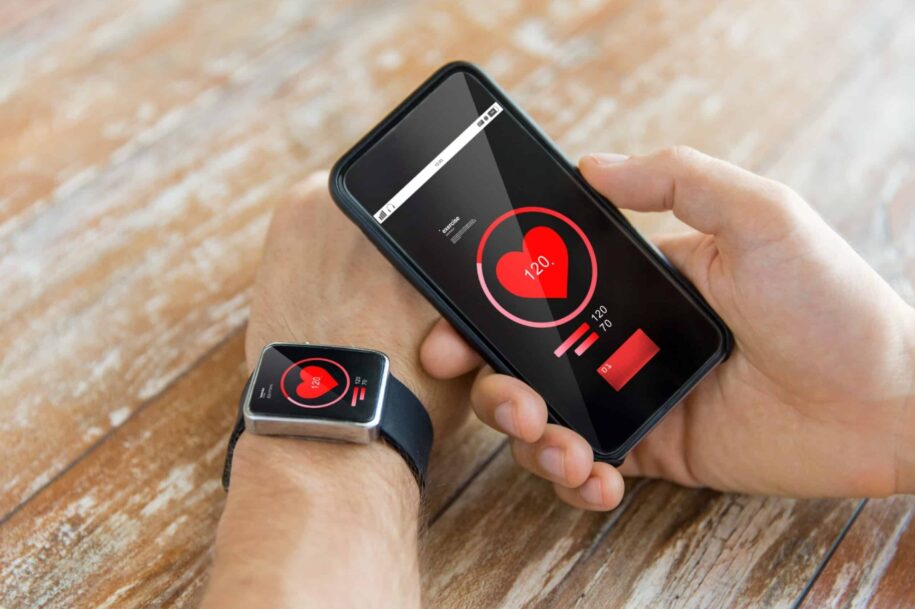
In the world of medical science, breakthroughs are always happening, but few are as transformative as the use of wearable tech to improve our health before problems even start. Imagine a future where a smart device on your wrist could alert you to a subtle change in your body that indicates a potential health risk, long before you feel any symptoms. This isn’t science fiction anymore. It’s the reality being built by companies and researchers who are leveraging wearables in preventive healthcare to empower us with a level of self-awareness we’ve never had before. This is truly changing how we approach our well-being.
1. The Revolution of Personal Health Monitoring
To truly grasp the impact of what wearable technology is doing, we first need to understand the old way of doing things. For generations, the process has been much the same: you visit a doctor for a check-up, answer questions about your lifestyle, and maybe get some bloodwork done. This is the cornerstone of traditional preventive care and has saved countless lives. But what if your health is changing in the time between those appointments? What if the data collected during a brief, 15-minute visit isn’t enough to see a larger pattern? This is where the old model can become a challenge.
1.1 The Challenge with Traditional Preventive Care
Traditional preventive care is a snapshot in time. The data—your blood pressure, your weight, a list of symptoms—is collected at a single moment. This can be misleading. You might have had a stressful day, which affects your blood pressure reading, or you might have a hidden issue that only manifests for short periods. The reliance on intermittent data can lead to missed opportunities for early intervention. Additionally, the sheer volume of people needing regular check-ups is overwhelming the healthcare system. This is a problem that needed a high-tech solution.
1.2 The Rise of Wearable Health Monitoring
Enter health monitoring with wearable tech. These devices provide a continuous stream of data, painting a much more detailed and accurate picture of your health. By tracking vitals like heart rate, sleep patterns, and activity levels 24/7, they can spot trends and anomalies that a single office visit would never reveal. This change alone has been a game-changer, allowing for a more complete understanding of an individual’s wellness journey. The real revolution began when deep learning and machine learning (ML) were applied to this data. For a deeper dive into how AI is making a difference in the healthcare space, you might find this article on How AI is Changing Healthcare.
2. Wearables and the Power of AI for Preventive Care
At its heart, the power of modern wearables is all about AI, a type of technology that can learn from data to provide insights. Instead of being explicitly told what to look for, an AI model learns on its own by being shown millions of examples. Think of it like a personal health coach that gets smarter the more it knows about you. The combination of wearable technology and AI is like putting a supercomputer in charge of your health data, helping you to make smarter decisions.
2.1 How AI-Driven Wearables Work
The AI platform inside a wearable is trained on an enormous dataset of physiological data, all expertly annotated by health professionals. The AI learns to distinguish between healthy and concerning patterns, identify specific types of metrics, and even quantify things like the quality of your sleep. The more data the system processes, the smarter it gets. It learns to recognize complex patterns and subtle changes that are linked to different types of conditions. This level of detail provides an objective, reproducible analysis that can help eliminate the guesswork of self-assessment. This kind of technology is a major step forward for wearables in preventive healthcare. You can learn more about how AI is transforming other aspects of healthcare by checking out this article on Abridge: AI Medical Scribe for Enhanced Healthcare Efficiency.
2.2 A Deeper Look at AI in Health Monitoring
The use of AI in health monitoring is a hot topic, and for good reason. It’s not just about finding a problem. It’s about predicting how your body might respond to certain lifestyle changes or environmental factors. AI-powered wearables can analyze the complex relationship between your stress levels, sleep, and physical activity to predict when you might be most susceptible to illness or burnout. These insights are invaluable for advancing personalized wellness. For more on the ethical and social implications of this technology, a great resource is the article, “Wearable devices in medicine: Ethical and social challenges” from the National Library of Medicine.
3. Wearable Tech: A Game-Changer in Proactive Health
The potential for wearable tech to transform proactive health is immense. It’s not just about making the current process faster; it’s about unlocking new insights that were previously hidden. These devices are paving the way for a new era of personal health, one where we can use technology to get a much clearer picture of our own wellness.
3.1 Enhancing Accuracy and Efficiency
Accuracy is paramount in managing your health. A wrong decision can have negative consequences. A wearable provides a second, highly objective opinion, especially when it comes to tracking things like heart rate variability (HRV) or sleep cycles. It can flag areas of concern for you to review, helping to ensure no detail is overlooked. This collaborative approach, where human intuition is augmented by powerful AI, leads to more accurate and reliable personal health monitoring. By automating the time-consuming tasks of counting steps and logging workouts, a wearable frees you up to focus on what you do best: living your life to the fullest. For an example of how AI can improve diagnostic processes, take a look at this article from a reputable source like the National Cancer Institute on AI in Cancer Diagnosis.
3.2 Aiding in Chronic Disease Management
The process of managing chronic conditions is often long, complex, and incredibly difficult. One of the biggest challenges is maintaining consistency in monitoring. Wearables in preventive healthcare help with this by providing a continuous, automated way to track key metrics. For a person with diabetes, a continuous glucose monitor provides a real-time feedback loop. For someone with hypertension, a smart blood pressure cuff can track trends over weeks, giving a more complete picture than a single reading at the doctor’s office. This focus on precision is crucial for moving the entire field of chronic disease management forward. To understand more about the role of technology in clinical research, check out this post on Telemedicine: The Future of Healthcare.
4. The Wearable Platform: Beyond the Lab
A wearable isn’t just a piece of software; it’s a comprehensive platform that is being integrated into the workflow of major institutions and companies around the world. It’s a testament to the fact that manufacturers are building a tool that is both powerful and practical, connecting users to their health data in new ways.
4.1 Collaboration with Major Institutions
Wearable companies have formed partnerships with leading health insurance providers and medical centers. These collaborations are essential because they provide a bridge between the data collected on your wrist and your doctor’s office. For example, some insurance providers offer discounts for members who use a wearable to track their activity, which is a testament to how seriously they take preventive care. This is how the future of personal health is being built—through teamwork. You can read more about some of the collaborative efforts in this article from the Centers for Disease Control and Prevention on digital health.
4.2 The Impact on Patient Outcomes
Ultimately, all of this technology and research has one goal: to improve patient outcomes. The work of wearables in preventive healthcare has a direct impact on the lives of people seeking to improve their health. By providing faster and more accurate results, it can help doctors start the right treatment sooner. By accelerating the adoption of healthy habits, it helps people build a better foundation for their future. This mission is to give every person the right data and the most effective insights, and the technology is bringing us closer to that reality every day. For a look at how other AI platforms are making an impact in healthcare, this post on Top 5 AI Cybersecurity Tools Safeguarding Healthcare is a great read.
5. The Future of Health Monitoring with Wearables
The journey is far from over. Wearable tech is constantly innovating, pushing the boundaries of what is possible with AI and continuous health monitoring. The future they are helping to create is one where technology and human expertise work in perfect harmony.
5.1 How Wearables are Shaping the Future
The next steps for wearables involve creating even more sophisticated algorithms. Imagine an AI that can not only identify a heart arrhythmia but also predict when one is likely to occur based on your stress and sleep patterns. This level of predictive analytics is already on the horizon. Wearables are also becoming a core part of the evolving landscape of diagnostic imaging, where AI is no longer a luxury but a necessity for understanding our bodies. For another example of how AI is being used in a vital field, consider this post on Mira: At-Home Fertility Monitoring with Smart Tech.
5.2 Overcoming Obstacles and Looking Ahead
Of course, the road to this future isn’t without its challenges. There are technical hurdles to overcome, like ensuring the AI models are unbiased and can work with diverse datasets. There are also regulatory and ethical questions to address, particularly around data privacy. But the industry is tackling these issues head-on, working with regulators and experts to ensure the technology is not only effective but also safe and responsible. The goal is to build a future where AI and humans collaborate seamlessly to improve healthcare for everyone. This is the future of preventive care, and wearables are leading the way.
Conclusion
Wearables in preventive healthcare are a true pioneer in the world of personal wellness, demonstrating how powerful continuous monitoring and AI can be when applied to the critical field of personal health. By providing tools that enhance the accuracy, efficiency, and objectivity of health monitoring, these devices are not just improving a process—they’re helping to save lives and improve quality of life. The work is a powerful example of how technology can act as a force for good, assisting human experts and unlocking new insights that will shape the future of medicine. As this technology continues to evolve, we can be hopeful that our approach to health will become smarter and more precise, leading to better outcomes for everyone.
FAQs
1. How do wearable devices actually help with early disease detection? They work by continuously monitoring your body’s vitals and looking for subtle changes. For example, a wearable might notice a sustained increase in your resting heart rate or an irregularity in your sleep patterns. These could be early indicators of an underlying health issue. By alerting you to these changes, the device gives you a chance to speak with a doctor and get a proper diagnosis before the problem becomes more serious.
2. Are the health metrics provided by wearables medically accurate? It varies. Consumer-grade wearables are excellent for tracking trends and providing a general overview of your health, but they are not a substitute for medical-grade equipment. Some devices, like those with FDA-cleared ECG features, are highly accurate for specific functions. However, it’s always best to use the data as a guide and consult with your doctor for any health concerns, as they have access to professional medical diagnostics.
3. What role does AI play in improving the effectiveness of wearables for health? AI is crucial for making sense of the massive amount of data collected by wearables. It analyzes complex patterns and trends in your data that a person would never be able to spot. For instance, AI can compare your metrics against large population data sets to identify anomalies or use predictive analytics to forecast potential health issues, turning raw data into meaningful and actionable insights for both you and your doctor.
4. How can I ensure my personal health data is safe when using a wearable device? Data privacy is a major concern. To protect yourself, always choose reputable brands that have a strong track record of protecting user data. Read their privacy policies carefully to understand how your data is collected, stored, and shared. Additionally, use strong, unique passwords, and enable two-factor authentication whenever possible. Remember, you have the right to know how your data is being used.
5. How will wearables change the doctor-patient relationship in the future? Wearables are transforming it from a reactive relationship to a proactive partnership. Instead of a patient only sharing information during a brief office visit, the doctor will have access to a continuous stream of real-world health data. This allows for more informed decision-making and personalized care plans. It also empowers patients to take an active role in their health, fostering a more collaborative approach to wellness.
Leave a Reply