
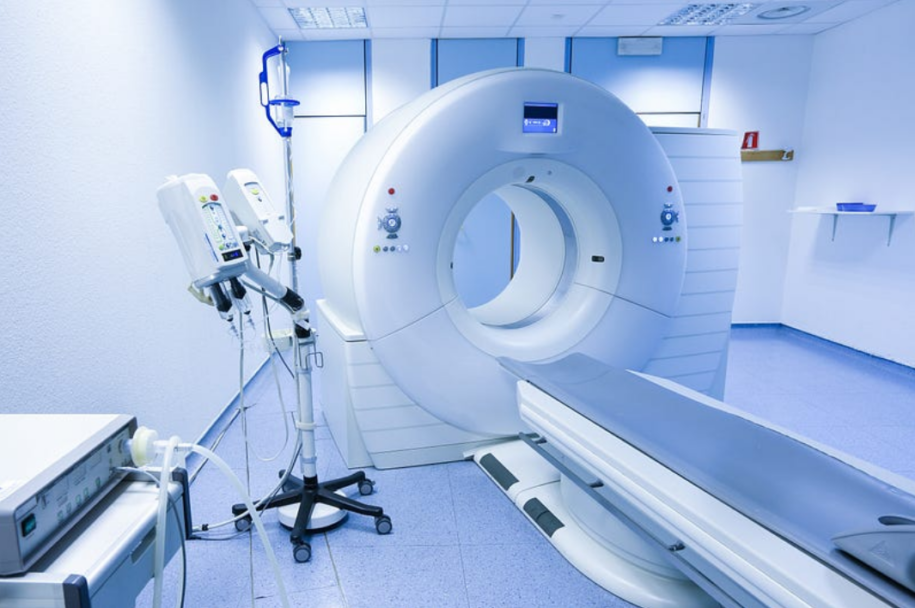
Imagine a world where a patient’s life hangs in the balance, and the critical information doctors rely on is subtly compromised. That is the grim reality we must prevent in modern healthcare. Medical imaging, from X rays to MRI and CT scans, forms the backbone of diagnostic medicine. These images, stored in the global standard Digital Imaging and Communications in Medicine or DICOM file format, hold extremely sensitive data, both personal and diagnostic. Therefore, the integrity and confidentiality of these files is not just a matter of compliance, it is a matter of life and death. This is why a new focus on robust Medical Imaging Security is absolutely crucial. We are quickly discovering that the old security playbooks simply are not enough to defend against sophisticated, targeted cyber attacks. We need smarter defenses, and that is where the power of AI anomaly detection steps in, offering a revolutionary way to secure these vital digital assets.
1. The Silent Threat: Why DICOM Files are Prime Targets for Attack
DICOM files are particularly attractive targets for cybercriminals and malicious insiders alike. Why? Because they are more than just pictures. They are complex containers of sensitive information, making them valuable and vulnerable.
1.1. Understanding the Vulnerabilities of DICOM Files
A DICOM file has two main components: the actual image pixel data and a large metadata header. This header can contain patient identifiers, study parameters, equipment information, and even fields for unstructured data. Think of it like this: the image is the painting, but the metadata is the detailed inventory tag, the artist’s notes, and the ownership history all rolled into one. Attackers can exploit this structure in two primary ways. They can hide malicious code or malware payloads within the unused or legitimate looking fields of the metadata header, a practice that often flies right past traditional antivirus software. Even more concerning, they can subtly alter key diagnostic information either in the metadata (like changing a date or a patient ID) or, most dangerously, in the image itself. If a cancer nodule is deleted from the image data, or if an image is substituted entirely, the consequences for patient care are catastrophic. This unique complexity demands a specialized approach to Medical Imaging Security.
2. Redefining Defense: AI Anomaly Detection in Medical Imaging Security
For years, security teams relied on basic tools, but the threats have evolved. We must now turn to intelligent systems that can see what the human eye and simple rules cannot.
2.1. Moving Beyond Traditional File Integrity Monitoring
Traditional File Integrity Monitoring (FIM) uses simple cryptographic hashing (checksums) to create a digital fingerprint of a file. If even a single byte changes, the hash changes, and the system alerts you. On the surface, this sounds great for Medical Imaging Security. However, attackers are smart. A malicious insider might alter a tiny, seemingly insignificant piece of metadata that does not change the hash in a noticeable way or they might manipulate the image content in a way that is designed to fool a radiologist, not just break a checksum. Furthermore, a simple hash cannot tell you if the data itself is logically sound. For instance, if an entire image is replaced with a different, but still valid, image file, the system might not flag it as suspicious unless the new file’s content is analyzed. We need to look deeper than just the file’s outer shell.
2.2. The AI Baseline: Learning “Normal” in DICOM Data
AI anomaly detection offers a breakthrough. Instead of relying on static rules, a machine learning model is trained on a massive volume of historical, verified DICOM data. The model learns what “normal” looks like across all dimensions:
- Pixel Level: What does a typical CT slice look like in terms of texture, contrast, and noise distribution?
- Metadata Level: What is the typical range for the Acquisition Date, Manufacturer, and Slice Thickness for a specific type of scan?
- Contextual Level: Is it normal for an MRI study to be sent to a department that primarily handles X rays?
Once the AI has established this incredibly complex, multidimensional baseline, any incoming DICOM file that deviates significantly is flagged as an anomaly. This is a massive step up for Medical Imaging Security, moving from simple detection of changes to intelligent detection of suspiciousness. For more on how AI handles security automation, check out this post on AI for Security Orchestration (SOAR): Automating Healthcare Incident Response.
3. Detecting the Undetectable: Contextual and Collective Anomalies
The real genius of AI is its ability to spot anomalies that would be invisible to human inspection or traditional systems. We are talking about two very complex types of threats: contextual and adversarial.
3.1. Spotting Contextual Anomalies for Medical Imaging Security
A contextual anomaly is data that looks normal in isolation but is highly suspicious given its surroundings. Consider a patient’s DICOM file that is otherwise perfectly legitimate. However, an AI system might flag it because the image, a high resolution chest X ray, was transferred at 3:00 AM on a Sunday from a diagnostic machine that is only ever used during business hours. Or perhaps the metadata indicates the patient is 85 years old, but the image itself shows the bone density of a healthy 20 year old. Individually, the file transfer log is normal, and the image data is normal. But the context is abnormal. You can learn more about how AI helps in this domain in a paper on IOMT Security and Anomaly Detection in Medical Images from ResearchGate.
Deep learning models, especially those using recurrent or transformer networks, can analyze the entire sequence of events around a DICOM file to flag these discrepancies. This capability adds an unprecedented layer of proactive defense against both malicious insiders trying to cover their tracks and external attackers using stolen credentials.
3.2. The Threat of Adversarial Patching and Image Fingerprinting
This is perhaps the scariest threat to modern medical imaging. Adversarial patching involves making minute, almost imperceptible changes to an image that are specifically designed to fool an AI diagnostic tool. For example, a few altered pixels could cause an AI to incorrectly classify a malignant tumor as benign, or vice versa. These subtle alterations are often not visible to the human eye, and traditional file integrity checks will not catch them.
This is where AI anomaly detection flips the script, using specialized deep learning models like autoencoders to create an “image fingerprint” of what a real DICOM image should look like based on its internal statistical properties. If an incoming image deviates from this learned fingerprint, even by a tiny amount that a malicious actor introduced, the anomaly detection system flags it. The system is essentially asking: “Does the texture and noise of this image look like it was generated by a real CT scanner, or has it been algorithmically manipulated?” This sophisticated technique is becoming the final frontier in Medical Imaging Security, ensuring the clinical truth of the image is preserved. This defense is a key part of fighting threats, including those posed by insiders, as discussed in Insider Threat AI : Detecting Malicious and Accidental Data Exposure in EHRs.
4. Implementing a Robust AI-Driven Medical Imaging Security Strategy
Putting this defense into practice means a strategic shift in how healthcare organizations manage their Picture Archiving and Communication Systems (PACS). The AI anomaly detection solution must be seamlessly integrated into the PACS workflow, essentially acting as an intelligent gatekeeper before an image is stored or retrieved for diagnosis.
The system should monitor traffic in real time. For instance, if a large volume of DICOM files is suddenly requested by a non radiology workstation outside of normal hours, the AI needs to alert the security team immediately and potentially quarantine the transfer. This proactive defense minimizes the “dwell time” an attacker has within the system. Furthermore, incorporating security best practices like strong encryption, both at rest and in transit, remains a foundational pillar. You can find more details on this topic in a paper discussing Cybersecurity and Medical Imaging: DICOM Communication. But without the advanced intelligence of AI, encryption alone cannot prevent a trusted user from tampering with data after it has been decrypted.
The journey to superior Medical Imaging Security requires a layered approach. It begins with basic cybersecurity hygiene, which we detail in A Comprehensive Guide to Healthcare Cybersecurity, but it quickly graduates to the intelligence of AI. By integrating AI anomaly detection, healthcare providers can build a resilient defense that protects not only patient privacy but also the absolute integrity of clinical decisions. This strategy is also vital for the Internet of Medical Things, as explained in Securing Medical Devices: AI Powered Cybersecurity for the Internet of Medical Things (IoMT). Insights on general AI anomaly detection techniques also prove helpful, such as this guide on AI Anomaly Detection Techniques and Use Cases. Ensuring the security of vendors involved in this process is also critical, which is covered in Supply Chain Security: Protecting Healthcare Data Through Third Party AI Integrations. Finally, using secure, compliant data is key to AI success, as seen in Synthetic Healthcare Data: Training models without compromising patient privacy.
Conclusion: A New Era of Trust in Clinical Data
The volume and sensitivity of medical image data make Medical Imaging Security one of the most pressing challenges in healthcare today. As cyber threats become more sophisticated, moving beyond simple data theft to attacks that target the very integrity of a patient’s diagnosis, our defenses must evolve. AI anomaly detection in DICOM files is not just an optional upgrade; it is a fundamental shift in defense strategy. By teaching machines what “normal” looks like in the intricate world of medical images and their associated data, we gain an unparalleled ability to spot the minute, malicious deviations that could otherwise slip through. This proactive, intelligent approach ensures that when a physician looks at a scan, they can trust its clinical truth, securing the digital lifeblood of medicine and, most importantly, protecting the patient.
Frequently Asked Questions (FAQs)
1. How does AI Anomaly Detection specifically improve Medical Imaging Security beyond traditional firewalls?
Traditional firewalls and antivirus tools look for known threat signatures or block unauthorized access. AI anomaly detection is different because it focuses on behavior. It creates a baseline of what normal DICOM file content and transfer should look like, allowing it to flag a file that is technically allowed by the firewall but contains a hidden malware payload or a subtle, malicious change to the image data itself. It detects threats that are already inside the network or those using legitimate access.
2. Is AI anomaly detection the same as diagnostic AI?
No, they serve different purposes. Diagnostic AI analyzes an image to find a medical condition, like a tumor. AI anomaly detection for Medical Imaging Security analyzes the file and its context to find security threats, such as a tampered metadata field, an adversarial patch, or an unusual network transfer pattern. One is for clinical decision support; the other is for data integrity and defense.
3. What is “Adversarial Patching” and why is it a concern for DICOM files?
Adversarial patching involves making tiny, often invisible changes to the pixel data of an image. These changes are engineered to confuse or trick machine learning models, including both diagnostic AI and AI security tools. It is a major concern because an attacker could use it to manipulate the image to conceal or create a disease finding, potentially altering a patient’s diagnosis without leaving an obvious trace.
4. How does the DICOM metadata header factor into Medical Imaging Security?
The DICOM metadata header is rich with information, and its security is essential. Attackers can exploit it to hide non image data, use it as a low visibility channel for communication, or change fields like the patient’s age or exam type. AI systems monitor this metadata closely for any values that are out of the learned ‘normal’ range or inconsistent with the image content, providing a strong layer of defense against file tampering.
5. Can AI Anomaly Detection help with compliance regulations like HIPAA?
Absolutely. HIPAA and other global regulations require ensuring the confidentiality, integrity, and availability of Protected Health Information (PHI). By actively monitoring DICOM files for unauthorized changes or unusual access patterns, AI anomaly detection provides auditable proof of data integrity. This proactive stance significantly strengthens a healthcare organization’s ability to maintain compliance and avoid costly data breach penalties. For deployment guidelines for AI in imaging, you can refer to The Royal College of Radiologists’ guidance.
Leave a Reply