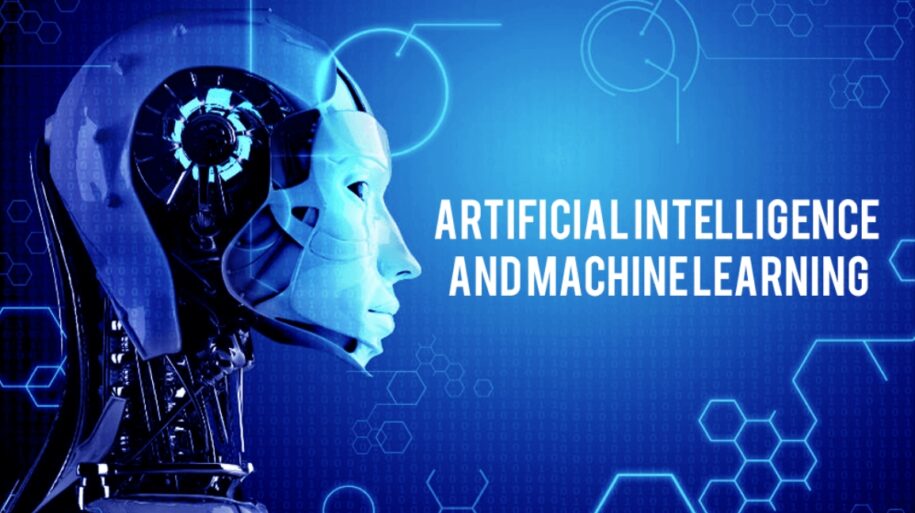
Think about how we manage health today. For decades, medicine has largely operated on a ‘one-size-fits-all’ model. If you have a specific condition, the doctor prescribes a standard treatment that works for most people. But what if you’re not ‘most people’? What if your unique biology, your genetics, and your lifestyle mean that standard treatment just doesn’t cut it, or worse, causes severe side effects? We’ve all been there, feeling frustrated when a common cold remedy doesn’t quite work its magic. Now, apply that uncertainty to life-altering illnesses. It’s a gamble, isn’t it? Well, all of that is changing, thanks to the revolutionary power of AI & Machine Learning. This powerful tandem isn’t just a tech buzzword; it’s the engine driving the shift toward personalized medicine, a future where your health plan is as unique as your fingerprint. We’re moving from population-based care to individual-centric care, and it’s perhaps the most exciting healthcare innovation of our time.
The Urgent Need for Personalized Healthcare
1. The Limitations of ‘One-Size-Fits-All’ Medicine
Why has medicine been standardized for so long? Simply put, it was the best we could do. Clinical trials had to prove a treatment was safe and effective for the general population. But our bodies are infinitely complex. Two people with the same diagnosis might have completely different responses to the same drug. One person might feel great; the other might suffer debilitating side effects because of a subtle genetic difference. This generic approach leads to wasted resources, unnecessary suffering, and, crucially, a slower path to recovery. It’s like trying to unlock every door in a building with one master key, it might open a few, but it’ll fail on most. To truly push the boundaries of healing, we must move beyond averages and embrace the individual.
2. The Explosion of Health Data and Its Challenge
We are generating healthcare data at an unprecedented rate. Every time you wear a fitness tracker, have a genomic sequence done, or visit a hospital, you create valuable data points. This genetic data, electronic health records (EHRs), medical images, and lifestyle logs create a massive, chaotic sea of information, far too vast for any human doctor or research team to process efficiently. This is where the challenge, and the opportunity, lies. How do we take trillions of data points and turn them into actionable insights for your health? We need a tool that can not only swim in that sea but navigate it and pull out the rare, specific pearls of wisdom. Enter AI in healthcare.
Understanding AI & Machine Learning in Medicine
The terms are often used interchangeably, but understanding them is key to seeing the revolution unfold. AI is the broad concept of a machine imitating human intelligence, while Machine Learning (ML) is a subset of AI where systems learn from data to identify patterns and make decisions with minimal human intervention.
3. How AI & Machine Learning Are Transforming Diagnostics
Imagine having a diagnostic tool that never gets tired, has read every single medical journal, and can spot a pattern invisible to the human eye. That’s the power of AI in healthcare. For example, machine learning algorithms are being trained on millions of medical images, X-rays, MRIs, and pathology slides. These systems can detect tiny cancerous polyps, early signs of diabetic retinopathy, or subtle heart anomalies often faster and sometimes more accurately than human specialists. The ML model learns the features associated with a disease and uses that knowledge to identify it in new patients. This doesn’t replace the doctor, but it gives them a superpower, acting as an always-vigilant second opinion that drastically speeds up the process, which, in medicine, can mean the difference between life and death. You can see similar data analysis at work in optimizing business processes.
4. The Role of Machine Learning in Predictive Modeling
The greatest potential of AI & Machine Learning isn’t just diagnosis; it’s prediction. ML models can crunch data from thousands of past patient outcomes, combine it with a new patient’s specific information (age, lifestyle, genomics), and predict their likelihood of developing a chronic illness, like heart disease or diabetes, years down the line. We can move from treating sickness to preventing it. This precision medicine approach allows doctors to intervene early with personalized lifestyle adjustments or preventative medications, creating a proactive, not reactive, health strategy. This predictive ability is changing how we manage risk, something we also find crucial when discussing investment strategies.
Precision Medicine Powered by AI & Machine Learning
The ultimate goal of this revolution is personalized medicine, and it’s utterly dependent on the sophisticated processing capabilities of AI & Machine Learning.
5. Analyzing Genetic Data with AI & Machine Learning
The human genome contains over three billion base pairs, an astronomical amount of genetic data. While sequencing technology is faster than ever, interpreting that data remains the hardest part. How do we find the single, tiny mutation responsible for a rare disease, or the cluster of genes that predisposes someone to a specific cancer? AI & Machine Learning algorithms are the key. They can scan a patient’s whole genome sequence, compare it to vast databases of known mutations and disease markers, and flag variations that are scientifically relevant, doing in minutes what would take human researchers years. This is true precision medicine, leading to treatments designed specifically for your DNA.
6. Tailoring Drug Development and Dosage
Traditional drug development is a long, astronomically expensive, and risky process. Nine out of ten experimental drugs fail. AI & Machine Learning is stepping in to radically accelerate this. Algorithms can simulate how a compound will interact with the human body, predicting toxicity, effectiveness, and even optimal dosage based on a patient’s profile. This cuts years and billions from the development timeline. Furthermore, ML helps optimize existing drug dosages. A model can analyze a patient’s metabolism, weight, and existing conditions to determine the exact milligram of a medication that will be most effective, minimizing side effects. This tailored approach dramatically improves patient outcomes. For more insight into the economic impact of such efficiency, see this detailed external study on the subject: the economics of AI in drug discovery.
Real-World Applications of AI & Machine Learning in Healthcare
The revolution isn’t coming, it’s already here. The impact of AI in healthcare spans from the doctor’s office to your wrist.
7. Revolutionizing Patient Care: From Wearables to Robotics
Your smart watch isn’t just counting steps anymore. It’s a continuous, personalized health monitor. Wearable tech generates streams of real-time data on heart rate, sleep quality, and activity. Machine learning algorithms analyze this data to detect subtle changes that could signal an impending health crisis, such as an atrial fibrillation episode or an infectious disease outbreak, and alert the user and their care team. Meanwhile, in operating rooms, ML-powered robotics are enabling surgeons to perform complex procedures with unparalleled precision medicine, reducing invasiveness and recovery times. These advancements showcase the true potential of healthcare innovation. We often discuss how automation improves quality across various sectors, check out pplelabs.com for what is possible in healthcare automation.
8. Enhancing Clinical Trials and Medical Research
Clinical trials are the bedrock of new medical discovery, but they often struggle with recruitment and inefficiency. AI & Machine Learning is helping researchers identify the perfect candidates for a trial much faster by screening vast pools of patient records against complex criteria. This makes trials more targeted and efficient, accelerating the path from lab bench to bedside. For medical researchers, ML helps make sense of mountains of unstructured data like physician notes and historical patient responses to unearth previously hidden relationships between diseases and treatments. This level of data processing is as vital to medical breakthroughs as it is to advanced cybersecurity measures. The future of medicine depends on this accelerated research.
Navigating the Future of AI & Machine Learning in Healthcare
While the potential is enormous, embracing AI & Machine Learning in medicine requires careful consideration of its inherent challenges.
9. Ethical and Data Security Challenges
Any discussion about analyzing personal genetic data must confront the critical issues of privacy and security. Who owns this sensitive health information, and how can we ensure it’s protected from breaches or misuse? Furthermore, algorithmic bias is a serious concern. If an ML model is trained primarily on data from a specific demographic (e.g., primarily white, affluent males), it may not perform accurately when applied to a patient from a different background. This can perpetuate health disparities, not fix them. We need rigorous oversight and transparent, ethically sound data practices to ensure this healthcare innovation truly benefits everyone. Ethical considerations are something we’ve explored in detail when discussing technology deployment. To understand the legal frameworks, it’s helpful to review information from regulatory bodies: HIPAA.
Conclusion: A Healthier Future Driven by AI & Machine Learning
The convergence of AI & Machine Learning is not just an incremental improvement in medicine; it is a fundamental shift in how we approach human health. It is the key to unlocking true personalized medicine, moving us beyond generalized treatments toward precision medicine tailored down to your molecular level. From predicting future illnesses to perfecting drug dosages and accelerating crucial medical research, this technological revolution promises a world where healthcare is more proactive, more accurate, and ultimately, more successful. The journey is ongoing, and while challenges in ethics and data security remain, the momentum of healthcare innovation powered by these intelligent systems ensures that a healthier, more predictable future is not just a dream, but a rapidly approaching reality for us all. If you’re excited by this future, remember that the most exciting breakthroughs are likely still ahead.
Frequently Asked Questions (FAQs)
Q1: What is the main difference between AI and Machine Learning in the context of personalized medicine?
AI (Artificial Intelligence) is the overarching field of creating systems that mimic human intelligence to perform tasks, such as making a medical diagnosis. Machine Learning (ML) is a subset of AI where systems learn from data without being explicitly programmed. In personalized medicine, ML is the engine that actually processes your genetic data and health records to find patterns and make predictions specific to you.
Q2: How is Machine Learning specifically used to create precision medicine?
Machine Learning models are essential for analyzing the massive volume of genetic data and molecular information from a single patient. They identify subtle genetic variations that influence disease risk or drug response. This allows doctors to prescribe the precision medicine, the right drug, at the right dose, for the right person based on their unique biological makeup.
Q3: Will AI in healthcare replace human doctors?
No, the goal of AI in healthcare is not to replace human doctors but to augment their abilities. AI & Machine Learning systems act as powerful assistants, handling the heavy lifting of data analysis, image review, and predictive modeling. This frees up doctors to focus on the human elements of care: diagnosis confirmation, complex decision-making, empathy, and direct patient interaction.
Q4: What are the biggest challenges facing the adoption of AI & Machine Learning in medicine?
The three primary challenges are data security and patient privacy (especially with sensitive genetic data), ensuring ethical and unbiased algorithms (to avoid perpetuating health disparities), and the need for new regulatory frameworks and interoperability between different hospital data systems. Overcoming these hurdles is crucial for widespread healthcare innovation.
Q5: How soon will personalized healthcare driven by AI & Machine Learning become standard practice?
AI & Machine Learning-driven tools are already in use in oncology, radiology, and diagnostics. However, for fully integrated personalized medicine to become the global standard, it will take time. We are seeing a rapid acceleration, and within the next five to ten years, many foundational elements like predictive risk scores and AI-guided treatment planning will likely become routine aspects of clinical care.
Leave a Reply