
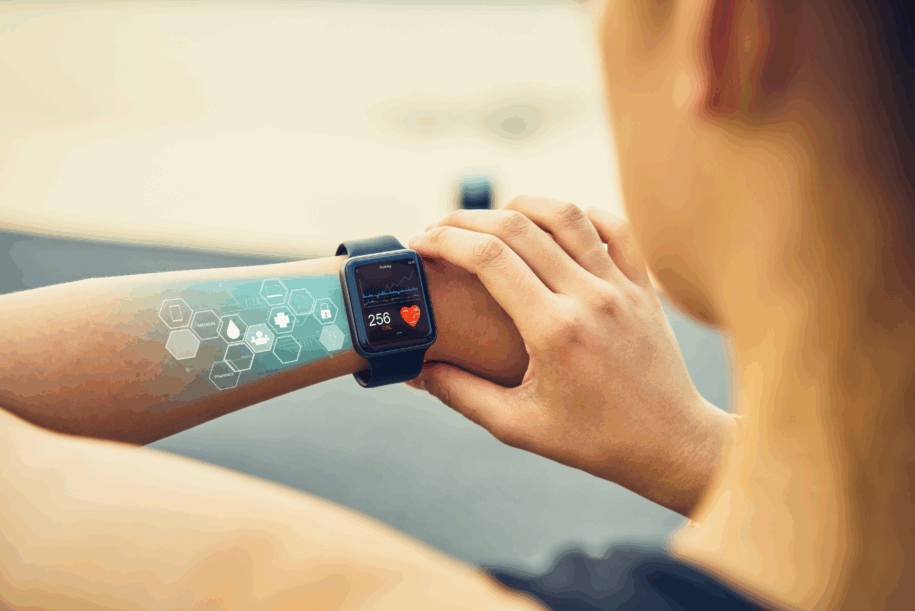
Have you ever stopped to think about all the data your smartwatch or fitness tracker collects? It’s a dizzying amount of information, from your heart rate every second to your sleep patterns overnight. For a long time, the traditional approach was to send all that raw, sensitive health information up to the cloud, a big distant server for analysis. But what if there was a better, faster, and much more private way? Enter Edge AI in Wearables, the technology that is singlehandedly rewriting the rules for personal health. It’s an exciting shift that moves the ‘brain’ of the analysis right onto your wrist, making health monitoring instant and incredibly secure.
- Introduction to Edge AI in Wearables: A Personal Health Revolution
The digital health revolution has been wonderful, giving us unprecedented insight into our own bodies. However, relying on the cloud creates two big problems: latency (delay) and privacy risks. If you’re using a device for critical health monitoring, a delay of even a few seconds can be too long. That’s why the convergence of wearable tech and artificial intelligence, specifically Edge AI in Wearables, is so transformative. This isn’t just an incremental update; it’s a foundational change that impacts everything from battery life to our trust in the technology.
1.1. Moving Past the Cloud: What Edge AI Actually Means
Think of the cloud as a massive, central library where every person’s data is stored and analyzed. Edge computing, on the other hand, is like having a powerful, efficient local library right inside your wearable device. Edge AI simply means that the complex machine learning algorithms, the “brains” of the AI, run directly on the watch or sensor. It analyzes the raw data before it leaves your device, if it leaves at all. This instant, on device processing power is what enables immediate health insights without needing a constant, fast internet connection. It’s about being smart where it matters most: at the “edge” of the network, right there with you. For a deeper dive into the technologies that power this transition, you can explore how businesses are leveraging AI at pplelabs.com/business-ai-leveraging.
2. Edge AI in Wearables Delivers Instant Health Monitoring
The most compelling argument for this technology is simple: speed. When it comes to managing your health, particularly chronic conditions or acute emergencies, an immediate response isn’t a luxury, it’s essential.
2.1. Why Speed Matters: From Latency to Life Saving Alerts
Imagine your wearable detects a potentially dangerous heart arrhythmia. If the data has to travel from your device, across a cellular network, to a distant cloud server for analysis, and then back again to trigger an alert, valuable seconds are lost. With Edge AI in Wearables, that analysis happens locally in milliseconds. The moment the pattern is detected, the alert is fired, giving you or a caregiver crucial time to react. This low latency capability is what makes the technology so powerful for time sensitive applications. If you’re interested in similar fast response applications, consider reading about the role of 5G in enterprise connectivity.
2.2. Real Time Vitals: How Edge AI Processes Data On the Spot
Traditional devices often send noisy, raw sensor data to the cloud. Edge AI is different because it uses highly optimized, “lightweight” machine learning models that are specifically designed to run on the tiny processors and minimal battery power of a wearable. It can filter out noise, extract the most important features like a significant drop in blood oxygen or an unusually long pause between heartbeats and interpret them right on the spot. It doesn’t need to send massive data packets over the internet. Instead, it sends only a small, meaningful alert, making it highly efficient. This process dramatically reduces the computing load and battery drain, which is a major benefit for all day health monitoring. This instant analysis capability is often lauded in academic and research circles, such as in this article about Real Time Health Monitoring with Edge AI.
3. The Massive Advantage of Data Privacy and Security with Edge AI in Wearables
Perhaps the most significant non medical benefit of Edge AI in Wearables is the profound improvement in data privacy. Our health information is among our most sensitive, and the thought of it floating around on remote servers has always been a major concern.
3.1. Keeping Your Health Data Safe: On Device Processing is Key
When the AI analysis takes place on your device, the raw, personal data, your minute by minute heart rate, your specific sleep stages never has to leave your wrist or pocket. Only anonymized, non identifiable insights or critical, pre vetted alerts are ever shared, perhaps with a secure healthcare provider portal. By processing data locally, you dramatically reduce the attack surface for cyber threats and data breaches. This approach aligns perfectly with modern data protection regulations like GDPR, which emphasize minimizing the transmission of sensitive information. Knowing your health secrets are staying with you, not being broadcast to a data center, is a huge step forward for trust in technology.
4. Edge AI in Wearables and The Future of Remote Patient Monitoring (RPM)
The real world impact of Edge AI in Wearables is being felt most strongly in Remote Patient Monitoring (RPM), which is changing the way we receive healthcare.
4.1. Beyond the Hospital: Continuous Care at Home
RPM allows doctors to monitor patients with chronic illnesses like heart failure or diabetes from the comfort of their homes. Edge AI takes this a step further by making the monitoring more continuous and intelligent. Instead of relying on a once a day upload of data, the wearable is constantly running analysis. If a patient’s vital signs start trending negatively, the Edge AI can spot the pattern much earlier than a human reviewing a chart hours later. This proactive alert system allows for what we call “preventive intervention,” meaning the doctor can call the patient before a small issue becomes a full blown emergency.
4.2. Enhancing Doctor Patient Interaction: Smarter, Filtered Data
Doctors are often overwhelmed by the sheer volume of data generated by traditional wearables. Edge AI in Wearables acts as a brilliant filter. It transforms a flood of raw data into a trickle of actionable insights. Instead of sending 100,000 heart rate readings, the device sends one summary: “Patient experienced three episodes of atrial fibrillation this morning.” This focused, intelligent filtering improves the doctor patient interaction because the doctor receives clear, clinically relevant information, saving them time and leading to faster, more accurate treatment decisions. Understanding how to manage and present complex data like this is essential.
Overcoming Challenges and Looking Ahead
While the promise is huge, there are still hurdles. Developers must create powerful AI models that can still run on the tiny power budget of a small device. Another challenge is ensuring that the data interpretation is consistently accurate across diverse populations. Despite this, the trajectory for Edge AI in Wearables is upward. We are already seeing the integration of more sophisticated Edge AI chips designed specifically for health sensors, allowing for the real time detection of more complex conditions, from sleep apnea to early signs of neurological disorders. For anyone following the cutting edge of medical device technology, this shift to the edge is the one to watch.
Conclusion: The Personal, Proactive Future of Health Tech
Edge AI in Wearables is more than a trendy buzzword; it’s the cornerstone of the next era in personal and preventative healthcare. It is fixing the core limitations of older, cloud dependent monitoring systems by giving us instant health monitoring without compromising data security. By bringing the brain of the AI down to the device, we gain speed, privacy, and most importantly, the chance for earlier intervention, a capability that could genuinely save lives. The future isn’t just about collecting data; it’s about making that data instantly useful right where you are. This proactive, private approach is what makes this technology a genuine game changer, giving us all a more secure and responsive tool for managing our well being.
Frequently Asked Questions (FAQs)
Q1: How is Edge AI in Wearables different from a regular smartwatch?
A regular smartwatch often collects data and sends the raw information to a server (the cloud) for analysis, which causes a delay. Edge AI in Wearables runs the analysis (the AI algorithms) directly on the device itself. This means the wearable can provide instant health monitoring and alerts without needing to communicate with the cloud, making it faster and much more private.
Q2: Does Edge AI in Wearables improve battery life?
Yes, in many cases it does. Since the device is only sending small, filtered insights or alerts rather than constantly streaming large amounts of raw, high resolution sensor data to the cloud, it significantly reduces the need for continuous, power intensive cellular or Wi Fi transmissions. This leads to a more efficient use of battery power.
Q3: Is my data still completely private if I use a wearable with Edge AI?
Edge AI in Wearables dramatically enhances privacy because the most sensitive, raw data stays on the device and is never transmitted off your person. Only summaries, anonymized information, or critical, pre defined alerts are sent out (often encrypted) to a specific doctor or app, giving you much greater control over your personal health information.
Q4: What is the main benefit of Edge AI for Remote Patient Monitoring (RPM)?
The main benefit is the ability to provide real time, proactive intervention. Because the analysis is instant, the Edge AI can detect subtle negative health trends or critical anomalies immediately, sending an alert that allows a healthcare provider to intervene within minutes or hours, often preventing a minor issue from becoming a medical emergency.
Q5: Can Edge AI in Wearables work without internet access?
Yes, that is one of its core strengths. Since the artificial intelligence models are processed locally on the device, the core health monitoring, data analysis, and anomaly detection can function perfectly even when you have poor or no internet connectivity. The device only needs connectivity to send an alert or synchronize daily summary data.
Leave a Reply