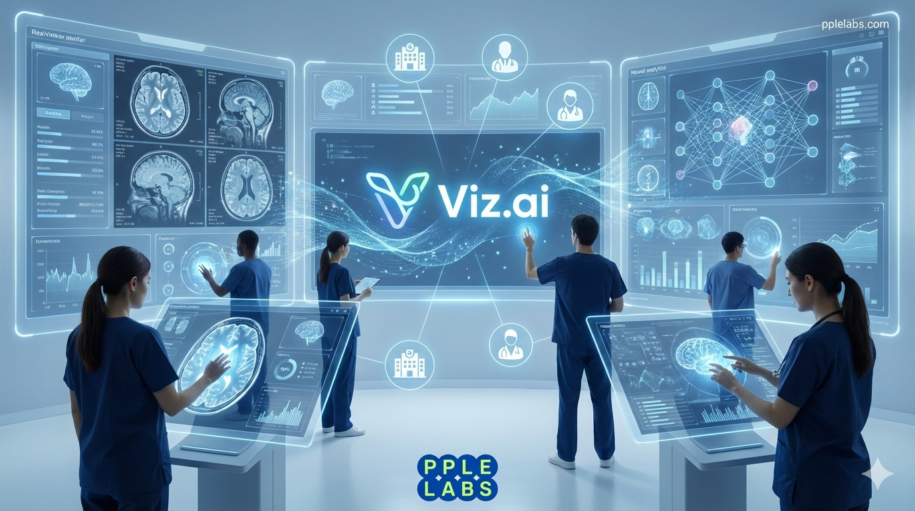
Viz.ai is currently changing the game for hospitals across the globe. Have you ever wondered why emergency rooms feel so chaotic? It is often because communication is fragmented and slow.
1. What is Viz.ai and Why Does it Matter?
Viz.ai is the leader of a new era in medicine where every second counts. Imagine a patient arriving at a hospital with a suspected stroke. In the past, the process was slow. A scan would be taken, a radiologist would look at it when they could, and eventually, a specialist would be called. This manual chain of events often took hours. Today, Viz.ai acts as a digital sentinel that watches every scan as it happens. It does not just wait for a human to notice a problem. Instead, it alerts the entire care team the moment it sees a blockage.
This technology is not just about fancy software. It is about fixing a broken system. Hospitals are busier than ever. Doctors are often overwhelmed with data. By using Viz.ai, these facilities can move from a reactive model to a proactive one. This shift is crucial because, in emergencies like a stroke, time is literally brain tissue. The platform uses sophisticated algorithms to ensure that the right doctor gets the right information at the exactly right moment.
Care coordination used to be done with pagers and phone calls. That is no longer enough. We need something faster. We need a system that can think ahead. This is exactly why digital health innovation is so important right now. By automating the triage process, we are giving clinicians the tools they need to perform at their best.
2. The Role of Viz.ai Stroke Care in Modern Medicine
Viz.ai stroke care is the flagship service of this company. It focuses on a condition known as Large Vessel Occlusion or LVO. This is one of the most dangerous types of stroke because a major artery in the brain is blocked. If the blockage is not removed quickly, the results are devastating. The Viz.ai platform analyzes CT angiography scans instantly. If it finds an LVO, it sends a high priority alert to the specialist on their phone.
This mobile first approach is a game changer. A surgeon could be at lunch or finishing another case and still see the exact images on their device. They do not have to wait to get back to a workstation. Have you ever seen how fast a pit crew works during a race? That is how Viz.ai stroke care makes a hospital team function. It synchronizes everyone so there is no wasted effort.
Beyond just identifying the problem, the platform creates a shared workspace. Nurses, radiologists, and surgeons can chat in a secure environment. They can see the same images and make a plan together. This level of AI in radiology ensures that nothing slips through the cracks. It is not just about the math of the algorithm. It is about the humans who use that data to save a life.
3. Viz.ai vs Aidoc: A Detailed Comparison for 2026
When hospitals look at neurovascular AI platforms, the debate often comes down to Viz.ai vs Aidoc. Both companies are giants in the field. However, they have different philosophies. Aidoc is known for its broad approach. It covers a massive variety of conditions across the entire body. It is like a generalist that can spot many different issues at once. On the other hand, Viz.ai is often seen as a specialist that goes deeper into care coordination.
In a recent head to head study, researchers found that while both systems are fast, Viz.ai shines in its ability to bring a team together. It is not just a triage tool. It is a communication tool. While Aidoc might flag more types of anomalies, Viz.ai focuses on the “what happens next” part of the journey. For a hospital that wants to improve its specific stroke metrics, Viz.ai is often the preferred choice.
Choosing between them is like choosing between a Swiss Army knife and a high performance scalpel. One does many things well, while the other is perfected for a specific, life saving task. Many institutions are now looking at AGI in healthcare to see how these specialized tools might eventually merge into a single, all knowing system. For now, the focus remains on which platform integrates best with the existing hospital workflow.
4. Advancing Medical Imaging Automation with Viz.ai
Medical imaging automation is the engine that drives this whole machine. In the old days, a radiologist had to manually scroll through hundreds of images for every single patient. It was exhausting work. Viz.ai uses deep learning to do the heavy lifting. It can scan an entire set of brain images in under two minutes. It looks for subtle patterns that might indicate a bleed or a clot.
This automation is now expanding beyond the brain. Viz.ai is moving into cardiology and trauma. It can now look at EKGs to find signs of heart failure or analyze chest scans for pulmonary embolisms. This means the same speed we see in stroke care is coming to other departments. Imagine a world where every critical condition is flagged before the patient even leaves the scanner. That is the future of precision medicine.
Of course, with all this automation, security is a major concern. We must protect this sensitive data from hackers. This is why healthcare cybersecurity is a top priority for developers. If the system is not secure, it cannot be trusted. Viz.ai takes this seriously, ensuring that every alert and image is encrypted and compliant with all privacy laws.
5. How Viz.ai Reduces Time to Treatment for Patients
The most important metric in any hospital is the time to treatment. For stroke patients, we often talk about “door to groin” time. This is the time from when the patient enters the hospital to when the surgeon starts the procedure. Clinical studies published by the American Heart Association have shown that Viz.ai can reduce this time by more than an hour in some cases.
Think about that for a second. An extra hour of blood flow to the brain can be the difference between walking out of the hospital and being paralyzed for life. Every minute a stroke goes untreated, a patient loses about two million brain cells. By using AI clinical triage, we are effectively stopping the clock. The platform acts as a digital traffic controller, clearing the way so the patient can reach the operating room without delay.
There is also the benefit of identifying patients who need to be moved to a different hospital. Smaller clinics often do not have the staff to perform complex surgeries. Viz.ai helps these smaller sites identify a stroke early so they can transfer the patient to a larger center immediately. This “hub and spoke” model is only possible because of the real time data sharing provided by the platform. This is a perfect example of how AI solutions can bridge the gap between rural and urban healthcare.
6. The Human Element in AI Driven Healthcare
We must remember that AI is a tool, not a replacement for a doctor. Some people worry that machines will take over medicine. But if you talk to a surgeon who uses Viz.ai, they will tell you it makes them feel more human. Why? Because it takes away the stress of waiting. It removes the clerical work of making phone calls and checking for updates.
When the machine handles the data, the doctor can handle the patient. They can spend more time talking to the family or preparing for the surgery. This synergy is the key to success. We are not looking for a world without doctors. We are looking for a world where doctors have superpowers. However, we must also be careful about adversarial AI and ensure that these models are always accurate and unbiased.
Viz.ai is a perfect example of how technology can support human expertise. It gives the team a clear view of the situation so they can make the best decisions. It is like having a GPS in your car. It does not drive the car for you, but it sure makes it a lot easier to find your way home.
Conclusion
Viz.ai is clearly the future of AI care coordination. By combining medical imaging automation with real time communication, it has set a new standard for how we treat emergencies. Whether it is through Viz.ai stroke care or its expanding work in cardiology, the mission remains the same: saving lives by saving time.
The data is clear. Patients treated in hospitals using these neurovascular AI platforms have better outcomes. They recover faster and have fewer disabilities. As we look toward the rest of 2026, we can expect to see this technology become a standard requirement for every major medical center. The age of manual triage is over. The age of the smart hospital has begun.
Frequently Asked Questions
1. What is the main benefit of Viz.ai stroke care? The primary benefit is speed. By using AI to detect large vessel occlusions, the platform can alert a specialist in seconds. This reduces the time to treatment, which is vital for saving brain cells and improving recovery rates for stroke victims.
2. How does Viz.ai vs Aidoc compare for most hospitals? While Aidoc offers a broader range of detection across many medical specialties, Viz.ai is often preferred for its deep focus on care coordination and mobile team alerts. Viz.ai is specifically designed to synchronize the entire clinical team during a crisis.
3. Can Viz.ai detect conditions other than stroke? Yes. While it became famous for stroke care, Viz.ai has expanded its platform. It now includes modules for cardiology, vascular diseases, and trauma. It can analyze EKGs and CT scans to find various life threatening issues automatically.
4. Does Viz.ai replace the need for a radiologist? Not at all. Viz.ai acts as a second set of eyes. It flags suspicious scans so the radiologist can prioritize them. The final diagnosis and treatment plan are always made by a human doctor. It is a partnership between man and machine.
5. How much time can Viz.ai really save in an emergency? Studies have shown that the platform can save upwards of 30 to 60 minutes in the diagnostic process. In the world of stroke care, where every minute counts, this time savings can significantly reduce the level of long term disability for a patient.
Leave a Reply