
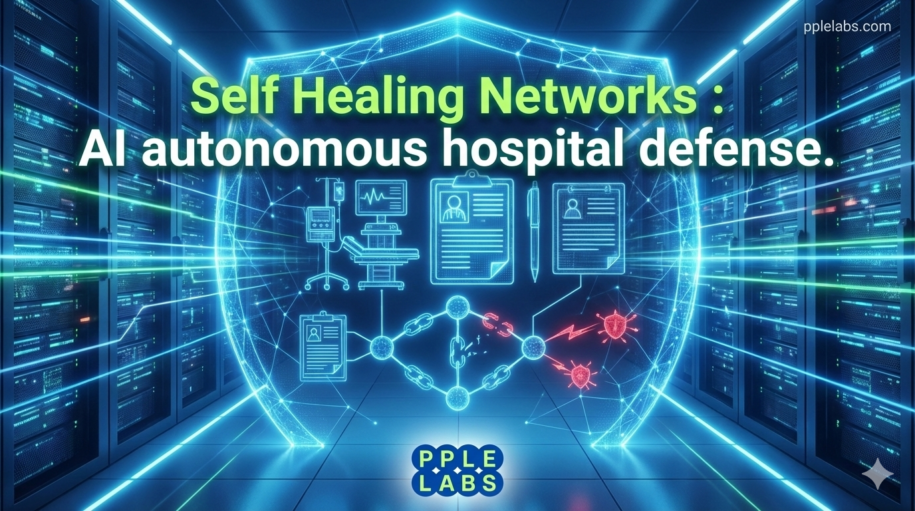
Self Healing Networks are the latest breakthrough in keeping our medical centers safe from digital villains. Imagine a hospital where the computer system fixes itself before a human even knows there is a problem. This is not science fiction anymore. In an era where hackers love to target healthcare data, having a system that can breathe, think, and repair itself is a total game changer.
1. Why Hospitals Need Self Healing Networks Now
Hospitals are busy places where every second counts for patient safety. When a computer network goes down, it is not just an annoyance. It can be a matter of life and death. Traditional security relies on humans to spot a problem and then fix it. But humans need to sleep, and they can be slow to react. Self Healing Networks change this by working around the clock without ever getting tired. They act like a constant guardian for sensitive patient records and vital medical machinery.
You might wonder why hospitals are such big targets. The truth is that medical data is worth a lot of money on the dark web. Also, hospitals often use older equipment that is hard to patch. This creates a perfect storm for cyber criminals. By adopting an autonomous defense, a hospital can stay one step ahead of these threats. It is like having a security guard who can teleport to any door the moment a lock starts to rattle.
If you want to understand how technology is shifting, you should look at how AI in healthcare is moving toward total automation. We are seeing a move away from reactive tools toward proactive systems that stop trouble before it starts.
2. The Growing Threat of Ransomware in Healthcare
Ransomware is a scary word for any hospital administrator. It happens when a hacker locks up all the digital files and demands money to release them. In a hospital, this means doctors cannot see patient histories or lab results. It can bring a whole building to a standstill. Self Healing Networks are specifically designed to stop this nightmare. They do not just watch for viruses. They look for weird behavior that suggests a ransomware attack is beginning.
Think of ransomware like a fire in a library. If you wait for the fire department to arrive, all the books might burn. An autonomous network is like a sprinkler system that detects heat and puts out the fire in one specific shelf before it spreads. This level of speed is the only way to beat modern digital threats. You can learn more about cybersecurity best practices to see how these layers of protection work together.
The impact of these attacks goes beyond money. It shakes the trust that patients have in their providers. When people feel their private info is not safe, they might hesitate to share important health details. This is why building a resilient hospital IT infrastructure is so critical for the future of medicine.
3. How Self Healing Networks Function as a Digital Immune System
A great way to think about Self Healing Networks is to compare them to your own body. When you get a tiny cut, your white blood cells rush to the area to fight off germs and start the repair process. You do not have to tell your body to do this. It just happens. An autonomous network works the exact same way for a hospital. It senses an intrusion and immediately starts to patch the hole or block the path of the attacker.
This digital immune system is always learning. It remembers old attacks and uses that knowledge to spot new ones. It creates a baseline of what “healthy” looks like for the network. If something looks “unhealthy,” the system takes action. This reduces the pressure on IT staff who are often overworked. Instead of chasing every little alert, they can focus on big picture projects while the AI handles the routine defense.
For more on how these systems integrate with other tech, check out digital transformation in hospitals. It is fascinating to see how every part of a medical facility is becoming interconnected and self reliant.
4. Using AI to Isolate Compromised Medical Devices Automatically
Medical devices like heart monitors or infusion pumps are often the weakest links in a network. Many of these tools were never built with high security in mind. If one gets infected, it can act as a gateway for a hacker to reach the rest of the hospital. Self Healing Networks are amazing because they can isolate these devices the moment they act up. If a heart monitor suddenly tries to talk to a server in a foreign country, the network cuts that connection instantly.
This process is called microsegmentation. It means the network is broken into many tiny rooms. If a fire starts in one room, the door is locked, and the fire cannot spread to the rest of the house. This keeps the most important parts of the hospital running even if one small device is under attack. Protecting these medical devices is one of the biggest challenges for CISOs today.
5. Integrating Software Defined Networking for Smarter Defense
Software Defined Networking, or SDN, is the brain behind the muscle of Self Healing Networks. In the old days, changing a network meant moving cables and flipping physical switches. With SDN, everything is controlled by software. This allows the AI to rewrite the rules of the network in milliseconds. If a certain path is blocked by a cyber attack, the SDN can create a new path for data to travel so that patient care is never interrupted.
This integration makes the network incredibly flexible. It is like a road that can change its own lanes and directions to avoid a traffic jam. For a hospital, this means that even during a heavy digital assault, the critical data gets through. You can read about how IBM explains cybersecurity to see how automation is changing the way we think about data paths.
The combination of AI and SDN creates a dynamic environment. It is no longer a static wall that a hacker can eventually climb. It is a shifting maze that adapts to the movements of the intruder. This makes it much harder for anyone to cause lasting damage to the facility.
6. Improving Mean Time to Respond with Autonomous Actions
In the world of IT, we talk about “mean time to respond.” This is the average time it takes to react to a threat. For humans, this might be minutes or even hours. For Self Healing Networks, it is often less than a second. This speed is vital because modern malware moves fast. If you can stop a threat in a millisecond, you prevent the damage from ever happening in the first place.
When a network can respond autonomously, it frees up the experts to do more complex work. It is a huge relief for a hospital to know that their defense is not waiting for a human to check an email at 3 AM. The system simply sees the threat, blocks it, and sends a report afterward. This efficiency is why many experts recommend looking into the future of telemedicine and how it relies on stable, fast responding connections.
7. Ensuring HIPAA Compliance through Automated Security Protocols
Hospitals have to follow very strict rules called HIPAA to keep patient data private. If they fail, they face massive fines and legal trouble. Self Healing Networks help maintain this compliance by ensuring that data only goes where it is supposed to go. Because the system is automated, it reduces the chance of human error, which is the leading cause of data breaches.
The AI can constantly audit the network to make sure all security settings are correct. If a setting is changed by accident, the network “heals” it back to the compliant state. This creates a very strong paper trail for regulators. It shows that the hospital is taking every possible step to protect patient information. The official HIPAA site gives a lot of detail on why these protections are so vital for the modern world.
Maintaining privacy is not just about rules. It is about respect for the person behind the data. By using data privacy compliance tools, hospitals show they value their patients.
8. The Future of Hospital IT Infrastructure and AI
The future looks bright for hospital tech. We are moving toward a world where the building itself is smart. From the lights to the surgical robots, everything will be part of a Self Healing Network. As AI gets better at predicting the future, these networks might even start to fix hardware issues before they happen. They could sense when a server is about to fail and move the data to a safe spot ahead of time.
We are also seeing more collaboration between different hospitals. Imagine if a hospital in New York catches a new type of virus, and its network “heals” itself. That information could be shared instantly with a hospital in California, so their network is already prepared. This creates a global web of defense that protects everyone. The NIST Cybersecurity Framework is a great resource to see how these standards are being built for everyone to use.
9. Final Thoughts on Autonomous Hospital Defense
In the end, Self Healing Networks are about peace of mind. They allow doctors to be doctors and nurses to be nurses without worrying about the computers failing. By using AI to create an autonomous defense, hospitals can focus on what they do best: saving lives. The technology is complex, but the goal is simple. We want a digital environment that is as resilient and reliable as the people working inside the hospital.
As we continue to innovate, these systems will become the standard for every medical facility in the world. They are the best way to ensure that our healthcare system stays open and safe for everyone who needs it.
Conclusion
Self Healing Networks represent a massive leap forward in how we protect our most sensitive institutions. By combining AI, software defined networking, and autonomous response, hospitals can now defend themselves against the most advanced cyber threats. This technology doesn’t just block attacks. It learns, adapts, and repairs itself to ensure that patient care never stops. As ransomware and other threats continue to evolve, having a digital immune system is no longer a luxury. It is a necessity for the modern healthcare landscape.
FAQs
1. What exactly does a Self Healing Network do when it finds a virus? It immediately blocks the infected part of the system. It then tries to remove the virus or restore the files from a safe backup without any human help.
2. Can Self Healing Networks replace human IT staff? No, they are meant to help humans. They handle the boring and fast paced work of blocking threats so that IT experts can focus on more important strategy and maintenance tasks.
3. Is this technology expensive for small hospitals? While there is an initial cost, it saves a lot of money in the long run by preventing expensive data breaches and system downtime.
4. How does this help with medical devices like pacemakers? It monitors the network traffic of those devices. If it sees something strange, it isolates the device from the rest of the network so the main system stays safe while the device is checked.
5. Does a Self Healing Network slow down the hospital internet? Actually, it can make it faster. By automatically managing traffic and fixing errors, it ensures that the network is always running at its best.
Would you like me to find more specific internal links from pplelabs.com to include in another section?
Leave a Reply