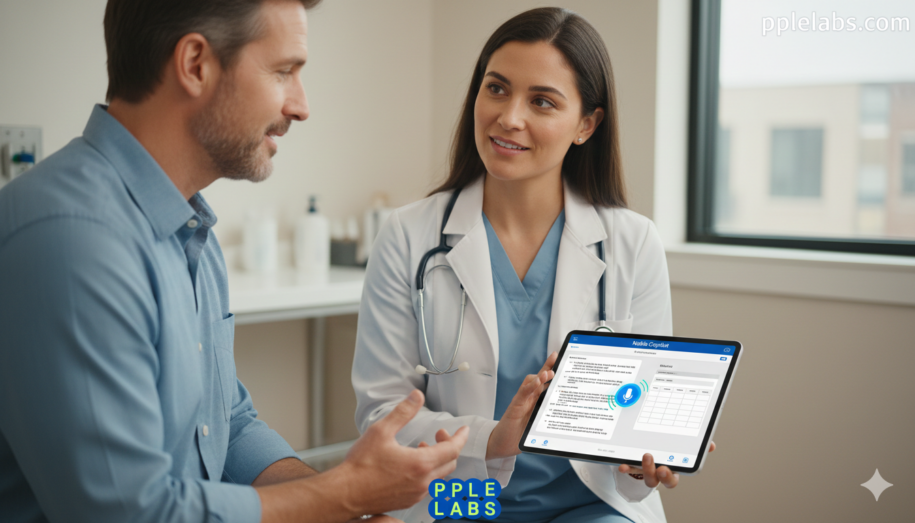
Nabla Copilot is the leading solution for modern healthcare providers who need to reclaim their time and focus on patient care. For years, the medical community has struggled with the weight of heavy documentation requirements. Doctors often feel more like data entry clerks than healers. This is where the magic of ambient intelligence comes into play. By using an advanced listener that understands the nuances of medical dialogue, this tool transforms the way a clinic operates. Much like the recent advancements seen in the Manus AI Agent, the goal here is total automation of repetitive tasks. When you enter a room, you want to be present. You want to look your patient in the eye. You do not want to be typing away while they share their concerns. By adopting a rapid AI for clinical medical notes, you choose a future where technology works for you instead of the other way around.
1. Understanding the Rapid AI Power of Nabla Copilot
The technology behind this platform is both sophisticated and incredibly simple for the end user. It relies on a combination of high quality audio processing and large language models that are fine tuned for the healthcare industry. This section explores how the system operates in real world settings.
1.1 How Nabla Copilot Captures Natural Conversations
Imagine walking into an exam room and simply pressing a button on your phone. From that moment on, Nabla Copilot listens to everything being said. It identifies the doctor and the patient as distinct speakers. This process happens in the background without any need for special commands. It is a major step toward AGI in healthcare because the system understands context without human intervention. The software filters out background noise and focuses on the clinical data. Whether you are discussing a complex surgical history or simple flu symptoms, the ambient recorder captures every detail accurately. This allows for a natural flow of conversation that feels human and unhurried.
1.2 Transforming Audio into Data with Nabla Copilot
Once the visit concludes, the magic truly begins. Nabla Copilot takes the raw audio and generates a structured medical note in seconds. This is not just a transcript. It is a summarized, formatted clinical document. The AI knows how to place information into the right sections of a SOAP note. It recognizes medications, dosages, and follow up plans with ease. This reminds many of the capabilities found in AgentKit in healthcare, where complex data sets are organized into actionable steps. The speed of this transition from speech to text is what makes the tool a rapid AI for clinical medical notes. You no longer have to wait until the end of the day to finish your charts.
2. Beating Physician Burnout Using Nabla Copilot
Burnout is a silent epidemic in the medical world. It ruins careers and impacts the quality of care that patients receive. Documentation is the primary culprit behind this stress. By automating the note taking process, we can begin to heal the healers.
2.1 Restoring Work Life Balance with Nabla Copilot
When doctors finish their shift, they should be able to go home and relax. Unfortunately, many spend their evenings finishing notes. This practice is often called pajama time. Nabla Copilot eliminates this burden. By completing notes during the patient visit or immediately after, the work day ends when the clinic doors close. A significant study on ambient documentation highlights how these tools drastically lower stress levels. If you save two hours every day, what would you do with that time? You might spend it with your family or enjoy a hobby. That is the true value of a rapid AI for clinical medical notes.
2.2 Enhancing Patient Interactions through Nabla Copilot
Patients notice when a doctor is distracted. They want to feel heard and seen. When you use Nabla Copilot, you are free to engage in deep listening. You can perform physical exams without worrying about remembering every tiny detail for the chart later. The AI has your back. This creates a much warmer environment for the patient. It builds trust and improves the overall clinical outcome. Does the patient mind the recording? Most do not. In fact, they often appreciate that their doctor is using the latest technology to ensure their records are accurate and thorough.
3. Integrating Nabla Copilot with Modern EHR Systems
A common fear among clinicians is that a new tool will be hard to set up. You might worry about technical glitches or data silos. However, this platform is built to play well with others.
3.1 Streamlining Workflows with Nabla Copilot and Epic
Integration is a core strength of this system. Nabla Copilot works within the browser or as a mobile app that connects to your Electronic Health Record. Whether you use Epic, Cerner, or Athena, the data transfer is smooth. You can review the draft note and then send it directly to the patient chart with one click. This level of efficiency is vital for high volume practices. To understand the importance of secure and organized data, one can look at how synthetic medical data is used to train these models safely. The goal is to keep the data flowing without creating extra steps for the physician.
3.2 Technical Flexibility of Nabla Copilot APIs
For larger health systems, customization is key. Nabla Copilot offers robust APIs that allow developers to tailor the experience. This means you can create custom templates that match the specific needs of your specialty. Are you an orthopedist who needs specific gait analysis notes? Or a psychiatrist who requires detailed mental status exams? The AI can be trained to follow your lead. This flexibility makes it a top choice for diverse medical groups. According to reports from Spark Health, clinics that adopt flexible AI solutions see a much higher satisfaction rate among their staff.

4. Choosing Nabla Copilot Over Traditional Methods
The medical field has tried many ways to solve the documentation problem. From dictation services to human scribes, none have been perfect. This new era of AI provides a solution that is both reliable and affordable.
4.1 Comparing Nabla Copilot with Human Scribes
Human scribes are great, but they come with challenges. They are expensive to hire and train. They also add another person to the exam room, which can make some patients uncomfortable. Nabla Copilot offers the same level of assistance at a fraction of the cost. It never takes a sick day and does not need a lunch break. When you compare it to other AI options like the Abridge AI medical scribe, you see that the market is moving toward these automated assistants because they are simply more scalable. Why hire a person when a rapid AI for clinical medical notes can do the job better?
4.2 Why Nabla Copilot Leads the Ambient AI Market
What sets this tool apart from the rest? It is the focus on speed and user experience. Some AI tools are clunky and require a lot of editing. Nabla Copilot is known for producing high quality drafts that require very little correction. The Nabla team has focused on making the interface as clean as possible. In a busy clinic, you do not have time to navigate complex menus. You need a tool that works as soon as you open it. This commitment to simplicity is why so many private practices are making the switch.
5. Ensuring Security and Privacy within Nabla Copilot
Privacy is the most important factor when dealing with health data. You must be able to tell your patients that their information is safe. This platform takes that responsibility very seriously.
5.1 HIPAA Compliance Standards in Nabla Copilot
The system is designed to be fully HIPAA compliant. All data is encrypted using the highest industry standards. Crucially, Nabla Copilot does not store the audio recordings by default. Once the note is created, the audio is wiped from the server. This minimizes the risk of a leak and ensures that your clinic remains within legal guidelines. This approach to security is similar to the rigorous standards seen at PathAI and other leading medical tech firms. You can rest easy knowing that your patient records are guarded by the best security protocols available in 2026.
5.2 Ethical Data Practices for Nabla Copilot Users
Ethics in AI is a hot topic. How do we ensure the machine is not biased? The developers of Nabla Copilot use diverse data sets to train their models. This ensures that the AI understands different accents, dialects, and medical conditions accurately. A recent PubMed study on AI usability suggests that when AI is trained ethically, it improves the equity of care. The doctor always remains the final authority. The AI provides the draft, but the human signs the note. This keeps the accountability exactly where it belongs.
Conclusion
We are at a turning point in medical history. The days of spending hours on manual documentation are coming to an end. Nabla Copilot offers a powerful, rapid AI for clinical medical notes that actually works. It helps doctors feel better, patients feel heard, and clinics run more smoothly. By integrating this technology today, you are making a long term investment in your own wellbeing and the success of your practice. The future is ambient, and the future is here.
Frequently Asked Questions About Nabla Copilot
1. Is Nabla Copilot difficult to set up in a small clinic? Not at all. You can start using it in minutes. Most doctors find the mobile app very intuitive. You do not need an IT team to get it running.
2. How does Nabla Copilot handle medical jargon? The AI is specifically trained on millions of medical records. It understands complex terms, abbreviations, and even brand names of rare medications. It is far more advanced than general purpose voice assistants.
3. Can I use Nabla Copilot for telehealth visits? Yes, it works perfectly for virtual care. You can run the recorder while you are on a video call with your patient. The AI will capture the conversation through your computer audio.
4. What happens if the AI makes a mistake in the note? The doctor is always required to review and edit the note before it is finalized. You can easily make corrections in the text editor. Over time, the AI learns from your edits to become even more accurate.
5. Does Nabla Copilot work in noisy environments? Yes, it uses advanced noise cancellation technology. It can focus on the voices of the doctor and patient even if there is some background noise in the clinic hallway or exam room.
Would you like me to generate a high quality image of a clinician using Nabla Copilot with the Pplelabs logo featured on the screen?
Leave a Reply