
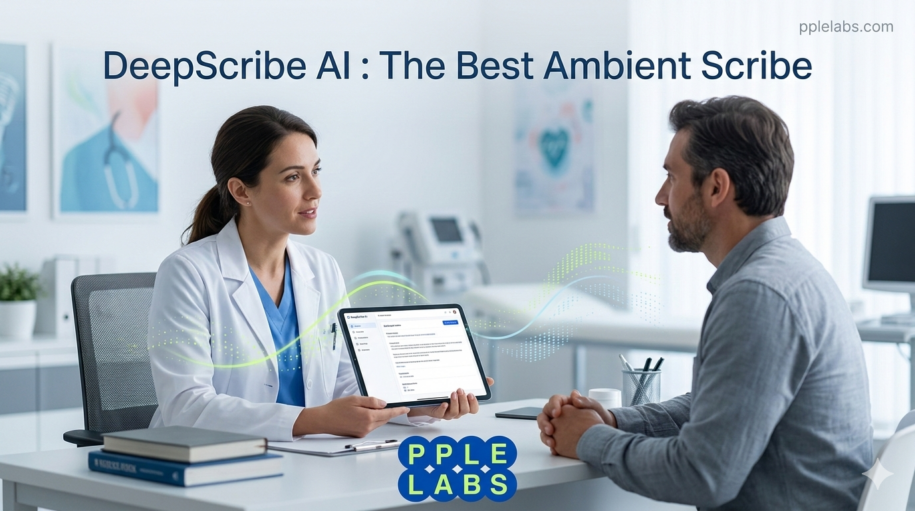
The medical world is finally moving away from the days of doctors staring at screens instead of their patients. We have all been there, sitting in a cold exam room while a clinician frantically types away, trying to keep up with the conversation. It feels distant. However, DeepScribe AI is changing that narrative by introducing a way for technology to fade into the background. As an ambient clinical intelligence tool, it allows the human connection to remain at the forefront of the encounter.
1. How DeepScribe AI Transforms the Clinical Workflow
Documentation has long been the primary source of burnout for healthcare providers. Imagine finishing a long day of seeing patients only to face three more hours of charting at home. This is the dreaded “pajama time.” DeepScribe AI acts as a silent observer that listens to the natural dialogue between a doctor and a patient. It uses advanced natural language processing to filter out small talk and focus on the clinical meat of the visit.
This technology does not just transcribe; it understands. It identifies the history of present illness, the physical exam findings mentioned aloud, and the final assessment and plan. By the time the patient walks out the door, a structured note is already waiting for review. This level of automation is similar to how Notable Health streamlines administrative tasks to keep the “digital front door” of a clinic swinging smoothly. When the clinical documentation is handled, the entire practice breathes easier.
2. Core Features of the Best Ambient Scribe
What makes DeepScribe AI stand out in a crowded market is its ability to handle complexity. Many generic AI tools struggle with the nuances of high stakes specialties. Whether you are in Oncology or Cardiology, the system adapts to the specific terminology and workflow of your field. It doesn’t just guess; it uses deep learning to ensure the context is accurate.
Furthermore, the integration with major systems is a game changer. DeepScribe AI offers deep, bidirectional integration with platforms like Epic and Cerner. This means it doesn’t just dump text into a box. It can actually populate discrete data fields, which is vital for long term patient tracking. This focus on precision is a trend we also see in tools like Glass Health, which provides evidence-based logic for clinical reasoning. Having an AI that “speaks” the same language as your EHR saves countless clicks and reduces the risk of manual entry errors.
3. Comparing DeepScribe AI with Competitors in 2026
In the current landscape of 2026, the competition for the best ambient scribe is fierce. You might have heard of Abridge or Nuance DAX. While those are formidable tools, DeepScribe AI often wins on customization and specialty depth. While some enterprise tools are built for a “one size fits all” approach, this platform allows individual providers to create macros and templates that match their unique style.
According to a recent KLAS Research report, specialty specific accuracy is the number one priority for clinicians this year. DeepScribe AI excels here by offering intelligent E/M coding suggestions directly within the note. It helps doctors capture the true complexity of a visit, which ensures that billing is both accurate and compliant. This proactive approach to data is much like the Regard Clinical Intelligence Agent, which scans records to surface missed diagnoses before they become a problem.
4. Security and Compliance in Ambient Documentation
Is it safe? That is the question every patient and hospital administrator asks. DeepScribe AI is built on a foundation of HIPAA compliance and high level encryption. The audio is captured, processed, and then the raw recording is typically deleted once the note is finalized. This ensures that sensitive conversations stay private.
Accuracy is the other half of the safety coin. We know that AI can sometimes “hallucinate” or misinterpret a soft spoken patient. To combat this, DeepScribe AI often utilizes a human in the loop system for its enterprise tiers. This means a trained medical scribe reviews the AI generated draft to ensure every detail is perfect before the doctor signs off. This dual layer of protection is essential, much like the safety protocols discussed in our guide on Preemptive Medical Cybersecurity. It provides peace of mind that the medical record is a truthful reflection of the visit.
5. The Future of AI Driven Healthcare
We are entering an era where the “silicon workforce” supports the human one. Tools like Hippocratic AI are already providing empathic voice agents for patient follow ups, and DeepScribe AI is the perfect partner for that ecosystem. When these technologies work together, the clinician is freed from the role of a data entry clerk and returned to the role of a healer.
The impact on the bottom line is also hard to ignore. By reducing the time spent on each note, clinicians can often see one or two more patients per day without increasing their total work hours. For more on how these shifts are impacting clinic revenue, check out our insights on Prosper AI Voice Agents. The transition to ambient intelligence isn’t just a luxury anymore; it is a necessity for any practice that wants to remain competitive in 2026.
Conclusion
Choosing DeepScribe AI means choosing a future where technology serves the doctor, not the other way around. It is the best ambient scribe because it balances deep technical accuracy with a user friendly interface that clinicians actually enjoy using. By automating the most tedious part of the job, it brings the joy of medicine back to the clinic. Are you ready to stop charting and start connecting?
Unique FAQs
1. Does DeepScribe AI work with my specific EHR? Yes, it features robust integrations with major platforms like Epic, Cerner, and athenahealth, allowing notes to flow directly into the correct patient charts.
2. Is the patient’s privacy protected during recordings? Absolutely. The platform is fully HIPAA compliant and uses advanced encryption to ensure that all data is handled with the highest level of security.
3. How much time can clinicians actually save? Many providers report saving up to 3 hours per day, effectively eliminating the need for “pajama time” spent on documentation after hours.
4. Does it require special hardware to run? No, DeepScribe AI typically runs through a secure mobile app on your smartphone or tablet, making it easy to carry from room to room.
5. Can it handle complex medical specialties? Yes, it is specifically tuned for over 50 specialties, including Cardiology, Oncology, and Orthopedics, ensuring that complex terminology is captured accurately.
Leave a Reply