
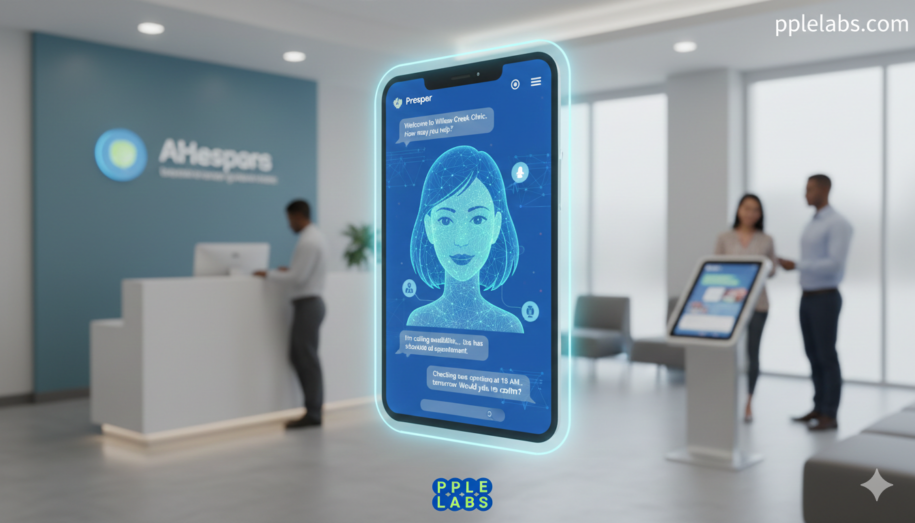
The modern medical clinic is often a whirlwind of ringing phones and frantic paperwork. If you have ever sat behind a front desk at 8 AM on a Monday, you know that the “human touch” often gets buried under a mountain of scheduling requests and billing questions. This is precisely where Prosper AI Voice Agents for Healthcare step in to save the day. These are not your average “press one for appointments” bots. They are sophisticated, conversational partners that handle the heavy lifting of administrative work so your clinical team can focus on what they do best: treating people.
In 2026, the demand for medical services has outpaced the available workforce. Clinics are looking for ways to scale without losing the personal connection that patients value. By deploying Prosper AI Voice Agents for Healthcare, facilities can offer a “silicon workforce” that never sleeps, never takes a sick day, and speaks dozens of languages fluently.
1. How Prosper AI Voice Agents for Healthcare Transform Patient Access
Getting a doctor’s appointment should be as easy as ordering a pizza, but we all know it rarely is. Traditional phone systems often lead to long hold times and frustrated patients who might hang up before they ever speak to a human. Prosper AI Voice Agents for Healthcare change this dynamic by offering instant, 24/7 responses. Imagine a patient calling at midnight to reschedule an appointment. Instead of a voicemail, they get a friendly, intelligent voice that can access the clinic’s calendar in real time.
These agents do more than just book slots. They can perform autonomous patient intake, gathering symptoms and medical history before the patient even walks through the door. This ensures that the physician has a clear picture from the very start. For a deeper look at how automation is changing the game, you can check out how Manus AI is evolving the world of general AI tasks. By integrating directly with over 80 different EHR and practice management systems, these voice agents ensure that every interaction is logged accurately and instantly.
2. Enhancing Clinic Efficiency with Prosper AI Voice Agents for Healthcare
The “8 AM rush” is a well known phenomenon in healthcare where the phone lines are flooded the moment the clinic opens. This creates a stressful environment for staff and a poor experience for patients. Using Prosper AI Voice Agents for Healthcare allows a clinic to handle hundreds of calls simultaneously. It is like having an infinite number of receptionists available at the push of a button.
When you offload these repetitive tasks, your staff experiences significantly less burnout. They can spend more time assisting the people standing right in front of them or handling complex clinical issues that require human judgment. Much like how Aidoc assists radiologists by flagging urgent scans, Prosper AI acts as a triage for the front office, sorting the routine from the urgent. This level of healthcare automation is becoming the standard for any practice that wants to remain competitive and solvent in today’s economy.
3. Financial Gains through Prosper AI Voice Agents for Healthcare
Efficiency is great, but let’s talk about the bottom line. Revenue cycle management (RCM) is often a bottleneck for clinics. Denied claims and unverified insurance lead to thousands of dollars in lost revenue. Prosper AI Voice Agents for Healthcare are purpose built to handle these back office headaches. They can call insurance providers to check eligibility, manage prior authorizations, and even follow up on outstanding claims.
By automating these phone based workflows, clinics can ensure that appointments are “financially cleared” before the patient arrives. This reduces the risk of non payment and speeds up the entire billing cycle. It is a proactive approach rather than a reactive one. For clinics that are worried about the security of these financial interactions, using tools like HiddenLayer AI can provide an extra layer of protection for their medical models. You can also explore more about the future of medicine through AGI to see where these autonomous systems are headed.
4. Why Compliance Matters for Prosper AI Voice Agents for Healthcare
Security is the biggest hurdle for any technology in the medical field. You cannot just use any chatbot when dealing with sensitive health information. Prosper AI Voice Agents for Healthcare are designed with HIPAA compliance as a core feature. All data is encrypted, and the agents are trained to handle PHI (Protected Health Information) with the utmost care.
The goal is to create a safe environment where patients feel comfortable sharing their needs. These agents use natural language processing to understand nuance and emotion, making the conversation feel human rather than robotic. For those looking at how other specialized agents operate, OpenAI’s AgentKit offers great insights into building task oriented autonomous systems. Whether it is a routine check in or a complex scheduling request, Prosper AI Voice Agents for Healthcare maintain a high standard of clinical accuracy and privacy.
5. Staying Ahead with Prosper AI Voice Agents for Healthcare
Adopting new technology can feel like a leap of faith. However, the results from early adopters are hard to ignore. Clinics using Prosper AI Voice Agents for Healthcare report a significant drop in missed calls and a boost in patient satisfaction scores. Patients love not having to wait on hold, and staff love not having to answer the same five questions a hundred times a day.
As we move further into 2026, the clinics that thrive will be those that embrace these silicon partners. It is not about replacing humans; it is about empowering them. By letting Prosper AI Voice Agents for Healthcare handle the “busy work,” we allow the heart of healthcare—the human connection—to take center stage once again. For more information on empathic AI, you might find the work of Hippocratic AI particularly interesting as they focus on the “human side” of voice interactions.
Conclusion
The integration of Prosper AI Voice Agents for Healthcare represents a massive shift in how clinics operate. From the initial phone call to the final billing statement, these agents provide a seamless, efficient, and compliant experience. They solve the dual problem of staff shortages and patient frustration, creating a win win scenario for everyone involved. If you are ready to modernize your clinic, these voice agents are the clear path forward.
Frequently Asked Questions (FAQs)
1. Are Prosper AI Voice Agents for Healthcare actually HIPAA compliant? Yes, they are built specifically for the healthcare industry. They use high level encryption and follow all regulatory guidelines to ensure that patient data remains secure and private at all times.
2. Can these agents integrate with my current EHR system? Absolutely. These agents are designed to work with over 80 major EHR and practice management platforms. They can read and write data directly to your system, ensuring that your records are always up to date.
3. Do Prosper AI Voice Agents for Healthcare sound like robots? No, they use advanced natural language processing and lifelike voice synthesis. They can understand context, handle interruptions, and maintain a conversational tone that feels very natural to the patient.
4. How long does it take to set up these voice agents? Most implementations take between three to six weeks. This includes configuring the agent to your specific clinic workflows and testing it to ensure it handles your unique patient needs correctly.
5. Can they handle calls in languages other than English? Yes, one of the biggest benefits of Prosper AI Voice Agents for Healthcare is their ability to provide multilingual support. This allows you to serve a diverse patient population without needing to hire additional bilingual staff.
Leave a Reply