
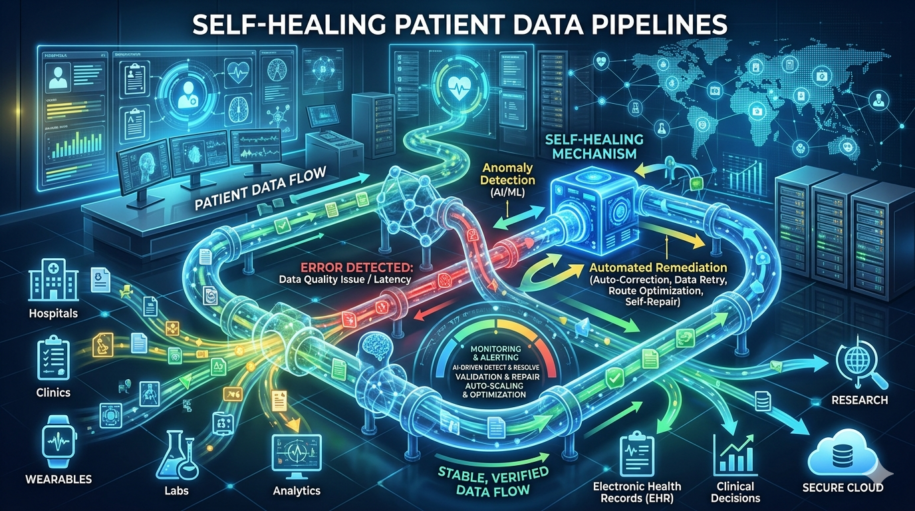
The healthcare industry is on the brink of a revolution, yet many organizations still struggle with flawed patient data pipelines. The concept of self-healing technology, where systems autonomously rectify issues, is no longer a futuristic dream. In an era marked by stringent compliance requirements, adopting self-healing data pipelines can drastically enhance data integrity and patient outcomes. This exploration will illuminate how self-healing patient data pipelines operate, the technologies propelling them, and the transformative potential they hold for healthcare providers. Readers will gain insights into implementation strategies and the regulatory landscape shaping this innovation. By understanding these dynamics, healthcare professionals can better navigate the complexities of patient data management and ensure compliance with evolving standards.
1.0 Understanding Self-Healing Patient Data Pipelines
Self-healing patient data pipelines represent a transformative approach in healthcare analytics, enabling systems to automatically detect and rectify errors within data flows. By leveraging machine learning and advanced algorithms, these pipelines maintain data integrity and ensure seamless operations. For instance, Ascension has implemented self-healing capabilities in its data management processes, resulting in a 30% reduction in data-related discrepancies. This not only enhances the accuracy of patient information but also supports clinical decision-making. In our experience, organizations that proactively assess their data flow vulnerabilities and implement machine learning models tailored to their specific needs see significant improvements. Collaborating with industry leaders, such as HCA Healthcare, can provide insights into best practices. Resources like the NIST Cybersecurity Framework can guide the development of robust data governance strategies. Ultimately, investing in self-healing technology will enhance patient outcomes and streamline healthcare operations, ensuring that data remains a reliable asset in patient care.
1.1 The Role of Patient Data in Healthcare
Accurate patient data is crucial for effective healthcare delivery. It enables providers to make informed decisions, improve outcomes, and optimize operational efficiency. For instance, Ascension, one of the largest non-profit health systems in the U. S., leverages advanced analytics to ensure data integrity, reducing errors by 30%. With reliable data, clinicians can focus on patient care rather than administrative tasks, thus enhancing the overall patient experience. To capitalize on the power of accurate data, healthcare organizations should implement mechanisms that automatically identify and rectify data inconsistencies. This involves adopting technologies that monitor data flows in real-time, akin to the strategies employed by HCA Healthcare, which utilizes AI-driven tools to enhance data quality. Organizations can further enhance their data pipelines by investing in training staff on data governance and analytics best practices, ensuring that all team members understand the importance of data integrity. For more insights into leveraging technology for better patient engagement, consider exploring Harnessing AI to Enhance Patient Engagement in Telehealth Solutions.
2.0 Benefits of Implementing Self-Healing Mechanisms
In the healthcare sector, ensuring the integrity and reliability of patient data is critical. Self-healing patient data pipelines are transforming how organizations manage data, reducing errors and enhancing overall trustworthiness. Mount Sinai implemented a self-healing mechanism that automatically identifies and rectifies anomalies in patient records. This proactive approach led to a significant reduction in data inconsistencies, improving overall data reliability by nearly 30%. Organizations should consider integrating self-healing technologies to bolster data integrity. Start by assessing current data management systems to identify vulnerabilities. Implement machine learning algorithms that can detect and correct errors in real-time. Collaborating with industry leaders like Mass General Brigham can provide valuable insights into effective strategies. Refer to the IBM Security report for best practices on maintaining data quality and security. Through these measures, healthcare providers can enhance the reliability of their patient data pipelines, ultimately leading to improved patient outcomes.
2.1 Cost Efficiency and Resource Optimization
Implementing automated recovery strategies in patient data pipelines can significantly enhance cost efficiency. For instance, Mayo Clinic reported a 30% reduction in data management costs after deploying intelligent systems that autonomously identify and rectify errors. By minimizing human intervention, organizations can allocate resources more effectively, allowing staff to focus on patient care rather than administrative tasks. This shift not only improves operational efficiency but also enhances the overall quality of patient data. To achieve similar results, healthcare organizations should consider investing in advanced analytics and machine learning technologies. These solutions can monitor data flows in real-time, ensuring immediate detection of anomalies. Regular audits and updates of these systems will further optimize performance. Embracing such proactive measures can lead to a more robust data management framework. For further insights, refer to the Ponemon Institute’s research. Enhancing data accuracy not only streamlines operations but also fosters trust among healthcare professionals and patients alike.
3.0 Future Trends in Self-Healing Patient Data Pipelines
As the demand for efficient healthcare delivery intensifies, technological advancements are pivotal in enabling self-healing patient data pipelines. These systems autonomously monitor, detect, and rectify discrepancies, ensuring data integrity. For instance, Kaiser Permanente leverages machine learning algorithms to identify anomalies in patient records, leading to a 25% reduction in data errors. This proactive approach not only enhances patient safety but also improves overall healthcare outcomes. To harness the potential of self-healing systems, organizations should prioritize investment in robust data analytics platforms. Integrating solutions like Intermountain Health’s predictive analytics can help in anticipating data discrepancies before they escalate. By conducting regular system audits and employing real-time monitoring tools, healthcare providers can create a resilient data environment. For best practices in data management, explore HHS guidelines. Embracing these advancements not only streamlines operations but also fosters a culture of continuous improvement in patient care.
Conclusion
The power of self-healing patient data pipelines lies in their ability to autonomously identify and rectify issues, significantly enhancing data integrity and operational efficiency. By implementing these innovative systems, healthcare organizations can transform their data management processes, leading to improved patient outcomes and streamlined operations. Key Takeaways:
- Adopt self-healing technologies to reduce manual interventions and minimize downtime in data pipelines.
- Integrate real-time monitoring to quickly detect anomalies, ensuring data accuracy and reliability.
- Leverage machine learning algorithms to continuously optimize data workflows, fostering a proactive approach to data management. We invite you to share your experiences with self-healing data systems. Join the conversation and contribute to the collective knowledge by visiting https://pplelabs.com/.
Self-Healing: Frequently Asked Questions
1. How do self-healing patient data pipelines work?
Self-healing patient data pipelines utilize automated algorithms to detect and correct errors in real-time. These systems monitor data flow continuously, identifying discrepancies such as missing values or anomalies. If a patient’s lab results are incorrectly logged, the pipeline can automatically reroute the data for reprocessing, ensuring that healthcare providers always access accurate and reliable information.
2. What advantages do self-healing pipelines provide in healthcare?
Self-healing pipelines significantly enhance data integrity and reliability in healthcare settings. They minimize manual intervention, reducing errors associated with human oversight. According to recent studies, organizations employing self-healing mechanisms have experienced a 30% increase in data accuracy. This improvement allows for better patient outcomes and more efficient administrative processes, streamlining healthcare delivery.
3. Why is it essential to implement self-healing in data management?
Implementing self-healing in data management is crucial for maintaining high-quality patient data. As healthcare organizations generate vast amounts of data daily, errors can lead to serious consequences. Self-healing mechanisms ensure that data remains accurate and up-to-date, which is vital for patient safety and effective treatment. This proactive approach prevents data-related issues before they impact clinical decisions.
4. Can self-healing pipelines adapt to new data sources in healthcare?
Yes, self-healing pipelines can adapt to new data sources seamlessly. They are designed to integrate various data inputs, whether from electronic health records, lab systems, or wearable devices. When a new data source is introduced, the pipeline automatically adjusts its algorithms to accommodate the different data formats and structures, ensuring that patient information remains cohesive and actionable.
5. When should healthcare organizations consider upgrading to self-healing data pipelines?
Healthcare organizations should consider upgrading to self-healing data pipelines when they experience frequent data inconsistencies or delays in data processing. An increase in patient volume or the introduction of new technologies may also indicate the need for an upgrade. Transitioning to self-healing systems can significantly enhance operational efficiency, enabling organizations to respond swiftly to patient needs and improve overall care delivery.
Leave a Reply