
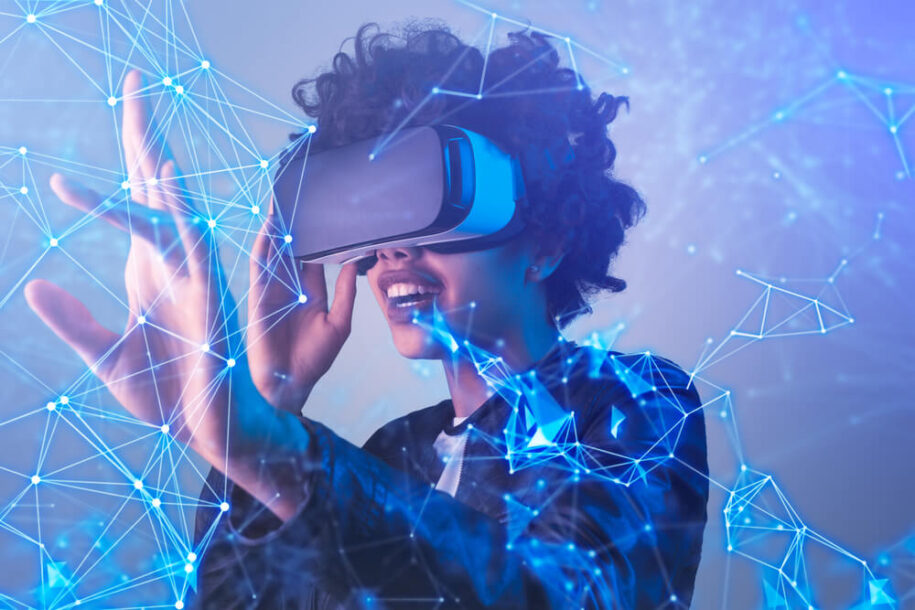
Have you ever tried one of those virtual reality games where you can look all around, but when you reach out to touch something, your hand just passes right through? It’s completely immersion-breaking, isn’t it? Now, imagine that same fundamental problem, but instead of a game, it’s a surgeon training to save a life. That’s the challenge the medical world faces today with VR simulations. They’re visually stunning, yet they feel hollow. But there’s a revolution brewing, and it’s all thanks to the powerful combination of AI and haptics. This partnership is finally bridging the gap between sight and sensation, bringing a genuine sense of touch into the digital world and fundamentally changing how the next generation of medical professionals acquires crucial skills. We’re not just talking about cool technology; we’re talking about safer surgeries and better patient outcomes.
The Current State of VR Surgical Training: Where Touch is Missing
VR training has been a fantastic addition to the surgical curriculum. Instead of the costly, ethically tricky, and often limited practice on cadavers or real patients, trainees can repeatedly practice procedures in a safe, controlled digital environment. But honestly, it’s only half the story.
1.1. The Gap Between Visual Immersion and Physical Reality
While modern VR headsets deliver breathtaking visual fidelity, you can see the tiny vessels, the color changes in tissue, and the subtle movements of instruments. the physical feedback remains clunky, or worse, non-existent. You might “cut” virtual tissue and see the visual result, but you don’t feel the resistance. You don’t feel the satisfying “give” of a successful suture or the fragile crunch of navigating calcified arteries. For a surgeon, the sense of touch, or proprioception, is as vital as sight. It’s what tells them if they are grasping too tightly, if the needle is passing through the right layer, or if they are applying dangerous pressure. Without it, the training is incomplete, like learning to drive a car blindfolded.
1.2. Why Haptic Feedback is the Holy Grail of Simulation
Haptic feedback, which is essentially the technology of touch, is the solution. It uses special devices often gloves, sleeves, or dedicated surgical instruments that can apply forces, vibrations, and motions to the user’s hand, mimicking the sensation of interacting with physical objects. Imagine picking up a virtual scalpel and feeling its actual weight and balance, then using it to cut digital skin and feeling the specific, subtle tension of the tissue resisting the blade. That level of tactile realism is the holy grail because it turns a visual exercise into a genuine muscle memory experience. The problem is that creating this perfect, real-time feedback is incredibly difficult until you add a smart brain to the mix.
2. Integrating AI and Haptics: Building a Better Sense of Touch
This is where the magic truly happens. Haptic hardware gives us the mechanical means to deliver touch, but Artificial Intelligence (AI) provides the intelligence to make that touch realistic. The two are inseparable for high-fidelity simulations.
2.1. How AI Powers Realistic Force Feedback
When a surgeon interacts with real tissue, the forces involved are dynamic and complex. They change based on the tissue type, the presence of disease, the angle of the tool, and the speed of the action. A human cannot pre-program every possible scenario. This is where AI and haptics intersect beautifully. AI algorithms, particularly machine learning models, are trained on massive datasets of real surgical force data. They learn the nuanced physics of human biology.
For instance, when a trainee pushes against a virtual liver, the AI instantly calculates the precise resistance, friction, and viscoelastic response based on its trained model and instructs the haptic device to apply that exact force back to the user’s hand, all in milliseconds. This is a level of instantaneous, physics-accurate realism that was previously unattainable. The AI ensures the feedback isn’t a canned vibration but an authentic, real-time physical reaction. You can learn more about how machine learning impacts real-time data processing in this great article on Machine Learning’s Role in Low-Latency Systems.
2.2. Machine Learning for Tissue Modeling and Deformation
Beyond force, AI is also critical for accurately modeling tissue. Soft tissues don’t just resist force; they deform, stretch, and tear in specific ways. An AI model can predict and render the complex, non-linear deformation of tissue under pressure, making the simulation feel organic and correct. If a trainee accidentally pulls too hard on a vessel, the AI ensures the virtual vessel stretches and potentially ruptures exactly as it would in a live patient, providing immediate, realistic, and unforgettable feedback. This makes AI and haptics not just a training tool, but a highly accurate scientific model.
3. Real-World Applications: Surgery Reimagined by AI and Haptics
The potential of this technology is vast, covering nearly every field of surgical expertise, from delicate eye procedures to complex cardiovascular interventions.
3.1. Mastering the Sutures: AI-Driven Precision and Feedback
Suturing is the foundation of surgery, yet it requires incredible dexterity and a delicate touch to prevent tissue damage while ensuring a watertight closure. In a traditional VR simulator, the trainee might see the needle pass through, but they don’t feel the difference between passing through skin, muscle, or the thin, fragile lining of an internal organ.
With AI and haptics, the system can:
- Grade Force: The AI monitors the force the trainee applies to the needle and warns them (or subtly changes the haptic resistance) if they are tearing the tissue.
- Evaluate Knot-Tying: It can instantly assess the tension of the knot, providing feedback on whether it’s too loose to hold or too tight to cut off circulation. This is a huge leap from simple pass/fail metrics.
This high-fidelity feedback accelerates the learning curve significantly, allowing trainees to master fine motor skills much faster than traditional methods, ultimately reducing the risk of errors when they transition to real operating rooms.
3.2. AI and Haptics in Complex Procedure Simulation: Angioplasty and Beyond
Consider a catheter-based procedure like an angioplasty, where a surgeon navigates a wire through a patient’s vessels. This is a procedure done almost entirely by feel. The resistance of plaque, the subtle clicks as the catheter tip passes a bifurcation, and the tension as a stent is deployed are all critical cues.
The integrated system of AI and haptics is revolutionary here. The AI simulates the precise internal topology of the virtual patient’s vessels including plaque buildup, elasticity, and tortuosity and generates the corresponding haptic feedback in real-time. The trainee feels the resistance changes as the wire encounters blockages, allowing them to develop the “touch” required to avoid perforation and successfully place the device. This kind of specialized training, as we’ve discussed in articles like The Role of AI in Diagnostics and Treatment Pathways, is the future of medical preparedness.
4. The Technical Deep Dive: From Algorithms to Actuators
Achieving this seamless, realistic touch requires incredible synchronization between software and hardware. The technology is as fascinating as the application itself.
4.1. The Role of Micro-Actuators and Sensory Devices
Haptic devices rely on specialized actuators, small mechanical components that generate force to push back against the user’s fingers or tools. These need to be incredibly fast, powerful, and small. Think about the difference in resistance between pushing on skin, bone, or a fragile membrane; the device must be capable of generating that entire spectrum of forces instantly and accurately. Advances in magnetic levitation and micro-motor technology are pushing the boundaries, allowing for devices that can provide an astonishing range of high-fidelity, nuanced feedback. You may find it interesting to see how other fields utilize similar tech in Haptics in Robotics and Manufacturing.
4.2. Optimizing Data Transfer: Keeping Latency Low for a Seamless Experience
Perhaps the greatest technical challenge is latency. If the time delay (latency) between the user’s action (e.g., pushing a scalpel) and the system’s haptic response (feeling the resistance) is even a fraction too long, the illusion of reality is shattered. It feels sluggish and unnatural. Human perception of touch is incredibly fast, demanding response times in the single-digit millisecond range.
The (AI) algorithms must be streamlined and efficient, they can’t waste time on complex calculations. They utilize highly optimized models and dedicated processing units to ensure the force feedback is generated practically instantaneously. This low-latency requirement is non-negotiable for effective surgical training, and advanced software architectures are key to making the promise of AI and haptics a reality. For more on how data structures support this speed, check out Optimizing Data Structures for Real-Time Applications.
5. Benefits Beyond Training: AI and Haptics in Pre-Surgical Planning
The immediate benefit of this technology is clearly in training, but its utility extends right into the operating room’s preparation phase.
5.1. Customizing Simulations Based on Patient-Specific Data
The most exciting application of AI and haptics is the ability to create patient-specific “digital twins.” Surgeons can take a patient’s actual CT, MRI, and ultrasound data, feed it into the AI simulation model, and the AI will build a precise, haptically-enabled 3D simulation of that specific patient’s anatomy, complete with tissue properties, tumor location, and vessel structure.
This allows the surgeon to literally “practice” the operation on the patient’s virtual twin hours or days before the real surgery. They can try different approaches, anticipate complications based on the realistic haptic feedback, and determine the optimal, safest path for the real procedure. This practice-before-you-cut capability is a game-changer for high-stakes, complex, and rare surgical cases, significantly improving confidence and reducing intraoperative surprises, as noted in reports on pre-surgical planning utilizing digital twins.
6. The Future of Medical Education: Ethical and Practical Considerations
As with any powerful technology, we must consider how to deploy it responsibly and equitably. The advancements in AI and haptics are not just about better technology; they are about better care.
6.1. Making AI and Haptics Accessible Globally
Currently, high-fidelity haptic simulators are expensive, often costing hundreds of thousands of dollars, limiting their access to wealthy institutions in developed countries. To truly revolutionize global health, we need to bring down the cost of these systems. Research is focusing on making haptic feedback accessible through smaller, more modular, and lower-cost devices that can still deliver essential, high-quality touch sensations. Furthermore, the accessibility of remote learning, is vital for distributing these high-tech simulation tools worldwide.
6.2. Addressing the Ethical Implications of Simulation Proficiency
If a surgeon’s competence is increasingly certified by their performance in an AI-driven haptic simulation, what are the new standards of practice? Who certifies the simulation itself? We need clear ethical guidelines and standardization bodies to ensure that these sophisticated training systems accurately reflect real-world surgical challenges and that the proficiency gained in the virtual world translates directly to improved patient safety in the physical one. This shift will require careful collaboration between engineers, surgeons, and medical boards to develop a new gold standard for skill assessment. We should look to global frameworks for guidance (External Link 2: Authority source on medical simulation standards or ethical AI in healthcare, e.g., WHO or a major medical society). The importance of human oversight in AI-driven systems is something we’ve explored previously in Human-in-the-Loop AI Systems.
Conclusion: A New Era of Surgical Skill Acquisition
The journey from simple visual VR to the highly realistic, touch-enabled training powered by AI and haptics is nothing short of revolutionary. We are moving away from a model where surgeons “learn by doing” on real patients, an inherently risky process to one where they can master complex, high-stakes maneuvers in a perfectly safe, infinitely repeatable, and highly customized digital environment. The precision, immediacy, and realism provided by intelligent haptic feedback are transforming medical education from a passive, observational process into an active, kinesthetic one. This ensures that the surgeons of tomorrow will be entering the operating room not just with knowledge, but with well-honed, AI-certified muscle memory. The future of surgery is tactile, intelligent, and safer than ever before.
FAQs
Q1: How does AI actually make haptic feedback more realistic compared to older systems?
Older haptic systems often relied on pre-programmed, static forces, a bit like pressing a button that always offers the same resistance. AI fundamentally changes this by using machine learning models trained on vast amounts of real-world surgical data. It can instantly calculate and generate dynamic, real-time feedback based on complex variables like the angle of the instrument, the specific type of virtual tissue, and the speed of your movement. This makes the simulated touch feel far more authentic, fluid, and unpredictable, just like in a real surgery. You can read more about how AI handles complex calculations
Q2: Will VR surgical training completely replace traditional methods like cadavers?
While the combination of AI and haptics offers unprecedented realism and is becoming a crucial foundational training tool, it is unlikely to entirely replace traditional methods in the near future. Cadaver dissection still offers irreplaceable experience with human anatomical variation, smell, and the three-dimensional relationships that even the best virtual models can’t fully replicate. Instead, VR simulation is seen as a powerful complementary tool, allowing trainees to perfect specific procedural skills and muscle memory before moving to less-forgiving environments like cadavers or the operating room.
Q3: What are the main challenges preventing the widespread adoption of AI-enabled haptic simulators?
The primary hurdles are cost and standardization. High-fidelity haptic hardware remains expensive, limiting access. Furthermore, developing the specialized AI models that accurately represent the diverse properties of human tissue is a massive undertaking. Finally, the medical community needs standardized metrics, certified by major organizations, to ensure that the proficiency gained in any given AI and haptics simulation is uniformly recognized and validated across institutions.
Q4: Can this technology be used for diagnosing patients, not just training surgeons?
Absolutely. While the main focus is currently on training, the underlying technology used in AI and haptics is being explored for diagnostic and rehabilitation purposes. For instance, haptic devices could be used to train physical therapists to recognize subtle tissue stiffness that is indicative of a specific condition. Moreover, researchers are exploring using haptic feedback as an interface to allow doctors to remotely “feel” a patient’s pulse or internal stiffness during a remote examination, essentially bridging the distance gap.
Q5: What’s the next big leap for AI and haptics in surgical simulation?
The next major leap will likely be the integration of patient-specific data to create highly accurate “digital twins” for pre-surgical practice, as mentioned earlier. However, the true game-changer will be the development of multi-sensory feedback. This means combining haptics (touch) with thermal feedback (feeling temperature changes) and olfactory cues (smell) to create an almost indistinguishable experience from a real operating room. This level of comprehensive sensory input will make the training environment complete, which aligns with broader concepts of comprehensive tech integration explored in The Metaverse and Digital Interaction.
Leave a Reply