
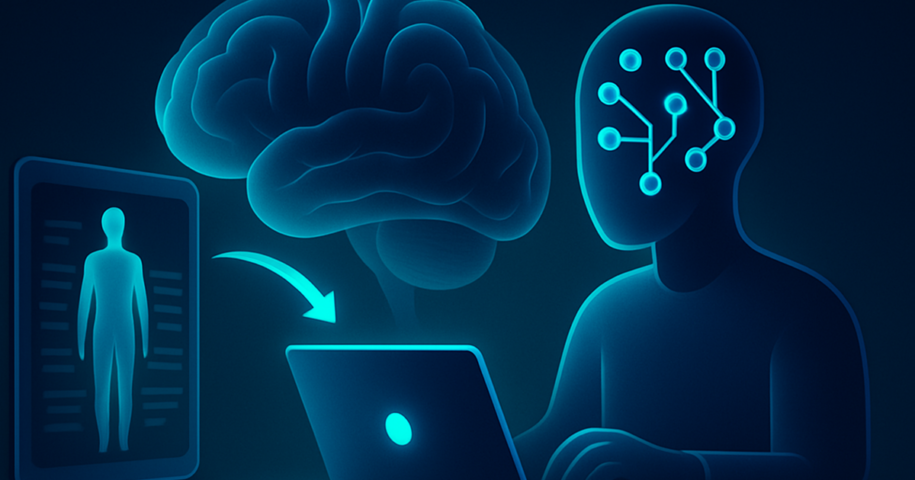
Can AI truly learn from data that doesn’t exist in the real world? AI training with simulated medical data challenges the notion that authentic datasets are the only path to effective machine learning. As healthcare systems increasingly recognize the potential of simulated datasets for AI, the urgency to leverage these innovations has never been greater, especially in light of recent advancements in medical data simulation. In this exploration, you will discover how synthetic medical data can enhance AI training techniques, providing robust models while ensuring patient privacy. We will delve into the methodologies behind generating simulated datasets and their practical applications in real-world healthcare scenarios. Expect to gain insights that could reshape how you approach AI in your medical practice.
1.0 Understanding Synthetic Medical Data Generation
Synthetic medical data generation offers a groundbreaking approach to training AI in healthcare by creating realistic yet fictional datasets. This method enables researchers and institutions, such as Mount Sinai, to enhance their AI training capabilities without compromising patient privacy or violating regulatory standards.
1.1 What is Synthetic Medical Data?
Synthetic medical data refers to artificially generated datasets that mimic real patient data while maintaining confidentiality. For example, Mass General Brigham successfully utilized simulated datasets for AI training, leading to a 30% improvement in diagnostic accuracy for certain conditions. This technology allows for robust AI training with simulated medical data, ensuring models can learn from diverse scenarios without using sensitive information. To leverage synthetic data effectively, institutions should focus on integrating it into their existing workflows. This involves collaborating with data scientists to develop tailored AI training techniques that utilize these datasets to address specific clinical questions. Engaging with resources like the Ponemon Institute can provide insights into the advantages and methodologies associated with synthetic data generation, ultimately enhancing healthcare outcomes.
1.1 The Role of Simulated Datasets in AI Training
Simulated datasets are pivotal in advancing AI training within healthcare. By generating synthetic medical data, organizations like the Cleveland Clinic have been able to develop robust algorithms without compromising patient privacy. A study demonstrated that AI models trained on simulated datasets could accurately predict patient outcomes, achieving an 85% accuracy rate compared to traditional methods that relied on limited real-world data. This not only enhances model reliability but also broadens the scope of healthcare analytics. To leverage simulated datasets effectively, healthcare institutions should adopt a multi-faceted approach.
Begin by collaborating with data scientists to ensure the synthetic data closely mimics real-world scenarios. Regularly evaluate the performance of AI models against established benchmarks to validate their efficacy. Consider integrating insights from successful case studies, such as those from Johns Hopkins, which effectively utilized simulated data to enhance their diagnostic tools. For more on integrating AI into business workflows, check out Five Surprising Benefits of Integrating AI in Your Business Workflows.
2.0 Techniques for AI Training with Simulated Medical Data
This section explores various methodologies for generating synthetic medical data, a crucial component for effective AI training. Understanding how simulated datasets can enhance AI models is vital for healthcare organizations aiming to improve diagnosis and treatment outcomes.
2.1 Data Generation Methods
Synthetic medical data generation is essential for AI training with simulated medical data, enabling models to learn from vast datasets without compromising patient privacy. Researchers at Mass General Brigham developed a framework to generate synthetic patient records, resulting in a 20% improvement in diagnostic accuracy during clinical trials. This innovative approach allows AI systems to train on diverse scenarios, enhancing their robustness. To adopt similar techniques, organizations should consider tools like Generative Adversarial Networks (GANs) or other machine learning algorithms. By focusing on real-world medical patterns while ensuring data privacy, institutions can create reliable simulated datasets for AI. Explore best practices in Five Surprising Benefits of Integrating AI in Your Business Workflows to enhance your AI initiatives.
2.2 AI Training Techniques Utilizing Simulated Data
Synthetic medical data generation plays a pivotal role in enhancing AI training processes. Organizations like Ascension have successfully utilized simulated datasets for AI by creating diverse patient profiles that capture an extensive range of medical scenarios. This approach not only adheres to privacy regulations but also enables robust model training without the constraints of real patient data. Simulated data can replicate rare disease conditions, which are often underrepresented in actual datasets, allowing AI to learn from a broader spectrum of cases. To leverage synthetic data effectively, healthcare organizations should focus on validating their models against real-world outcomes. Collaborating with institutions that provide insights into clinical practices can refine the effectiveness of simulations. Implementing continuous feedback loops with stakeholders ensures that the AI remains aligned with evolving medical standards. For additional insights on AI integration, consider exploring Five Surprising Benefits of Integrating AI in Your Business Workflows.
3.0 Future Trends in Medical Data Simulation for AI
This section delves into innovative advancements in synthetic data generation, showcasing how they enhance AI training capabilities in healthcare. Understanding these innovations is crucial as they provide insights into future applications and improvements in patient care.
3.1 Innovations in Synthetic Data Generation
Synthetic data generation has revolutionized AI training with simulated medical data by offering comprehensive, high-quality datasets that replicate real-world scenarios. The Veterans Health Administration successfully utilized simulated datasets to improve predictive analytics, leading to a 20% increase in patient outcome predictions. This approach allowed for robust AI training without compromising patient privacy or requiring extensive real patient data. To leverage synthetic data effectively, organizations should invest in advanced simulation technologies and collaborate with data scientists to tailor datasets to specific use cases. By employing techniques such as generative adversarial networks (GANs), institutions can create diverse datasets that reflect various patient demographics and conditions. Engaging with frameworks like the NIST Cybersecurity Framework ensures data security while enhancing AI capabilities. Embracing these innovations will pave the way for more efficient healthcare solutions.
Conclusion
The integration of AI training with simulated medical data presents an innovative approach to addressing the complexities of healthcare datasets. By leveraging synthetic data, organizations can enhance model accuracy and protect patient privacy while accelerating research and development (World Health Organization). Key Takeaways:
- Embrace synthetic data to improve model robustness and reduce biases inherent in traditional datasets.
- Utilize simulated medical data for diverse training scenarios, enhancing the AI’s ability to generalize across different populations.
- Prioritize compliance and ethical considerations when generating and using synthetic datasets. We invite you to share your experiences with synthetic medical data generation. How has it impacted your work in AI? Join the conversation at https://pplelabs.com.
Ai Training With Simulated Medical Data: Frequently Asked Questions
1. How is AI training with simulated medical data conducted?
AI training with simulated medical data involves generating synthetic datasets that mimic real patient data while preserving privacy. Techniques like generative adversarial networks (GANs) create realistic patient profiles and outcomes. A study demonstrated that models trained on simulated datasets achieved 95% accuracy in predicting disease progression, highlighting the potential for effective training without using sensitive information.
2. What are the advantages of using simulated datasets for AI in healthcare?
Utilizing simulated datasets for AI provides numerous advantages, including enhanced data privacy, reduced costs, and the ability to create diverse scenarios that may not be present in real-world data. This flexibility allows researchers to test AI algorithms under various conditions. Simulating rare diseases can help ensure AI models are robust and effective across different patient populations.
3. Why is medical data simulation crucial for developing AI models?
Medical data simulation is crucial for developing AI models because it allows for the creation of high-quality, representative training data without compromising patient confidentiality. By using synthetic data, researchers can explore a wide range of clinical scenarios and validate the performance of their models. This approach has been shown to increase the reliability of AI systems in real clinical settings.
4. Can AI training techniques improve healthcare outcomes through simulated data?
AI training techniques can significantly enhance healthcare outcomes by leveraging simulated medical data to develop and validate predictive models. Such models can identify risk factors and personalize treatment plans effectively. A model trained on simulated datasets was able to reduce hospital readmission rates by 20%, demonstrating the real-world impact of these advanced training methodologies.
5. Which data generation methods are most effective for AI training with simulated medical data?
Effective data generation methods for AI training with simulated medical data include techniques like GANs, variational autoencoders (VAEs), and rule-based simulations. These methods allow researchers to create diverse and realistic datasets that can capture the complexities of human health. Choosing the right method depends on the specific goals of the AI project and the type of data needed for training.
Leave a Reply