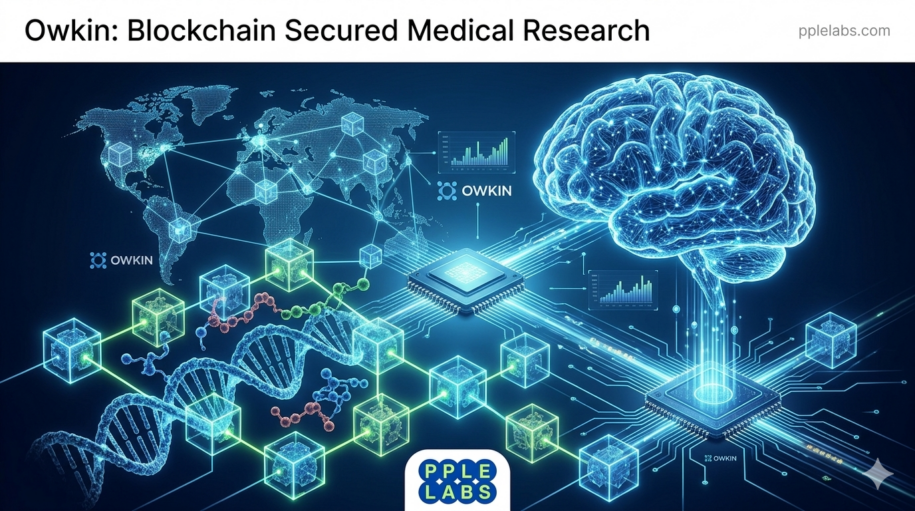
The landscape of modern medicine is shifting rapidly toward data driven discoveries(Owkin). Every single day, hospitals and research laboratories generate terabytes of highly valuable patient information. This wealth of information includes genomic sequences, digital pathology slides, and intricate electronic health records. However, a massive hurdle stands in the way of utilizing this wealth of information. Medical data is highly sensitive, strictly regulated, and naturally siloed across the globe. How can biopharma innovators safely analyze this scattered information without risking patient privacy or exposing proprietary institutional data?
The answer lies in an innovative platform that is fundamentally reshaping clinical collaboration. This platform is Owkin. By merging advanced artificial intelligence with decentralized infrastructure, this platform answers the critical call for securing medical cloud servers. Instead of pulling sensitive records into a risky centralized database, it allows smart algorithms to travel directly to the source. This unique methodology completely transforms the way global healthcare institutions co-operate, ensuring total data security and accurate tracking.
1. Understanding the Core Architecture of Owkin
To understand how this ecosystem functions, we must look at the unique technical engine under its hood. The platform stands on two structural pillars. These pillars are federated machine learning and blockchain technology. Together, they create a highly secure environment where data remains hidden, yet completely useful.
1.1 The Mechanics of Federated Learning
Traditional artificial intelligence development requires data aggregation. Engineers usually copy massive datasets from various hospitals and paste them onto a single centralized cloud server. This outdated method creates immense security vulnerabilities. It increases the risk of massive data breaches and openly violates strict global privacy regulations like GDPR.
The platform solves this issue by pioneering a decentralized training model. Federated learning allows the AI models to learn from decentralized data silos without moving the actual data itself. The foundational algorithmic models travel directly to the cloud servers of individual hospitals. The system trains the model locally on the native data of the institution. Once the local training session concludes, the model sends only the mathematical weights and optimizations back to a central coordinator. The raw patient records never leave the secure perimeter of the local institution. This approach establishes an incredibly strong foundation for protecting critical healthcare records. (Owkin)
1.2 The Role of Blockchain in Tracing Data Provenance (Owkin)
If the data stays behind local firewalls, how can global research partners trust the validity of the training process? This is where blockchain technology enters the equation. The decentralized ledger does not store medical records. Instead, it acts as an immutable, tamper proof ledger that registers data provenance and tracks every algorithmic interaction.
Every time a machine learning model interacts with a hospital dataset, the blockchain records a cryptographic proof. This creates a permanent, verifiable audit trail showing exactly which datasets contributed to the evolution of the AI. It eliminates guesswork and proves data ownership beyond a shadow of a doubt.
1.3 How Blockchain Rewards Contributing Medical Institutions
Beyond maintaining tight security, this decentralized ledger introduces a beautiful system for fair compensation. Historically, hospitals shared valuable medical data with major research entities and received very little credit or financial return. The platform uses smart contracts to change this dynamic completely.
Because the blockchain records every single dataset contribution with total clarity, it measures the exact value each hospital brings to a specific research loop. When a biopharma company develops a successful diagnostic tool or discovers a new drug candidate using the network, the blockchain ensures that the contributing medical institutions are rewarded fairly. This transparent compensation loop incentivizes continuous, high quality data sharing among global clinics.
2. Owkin Review: Evaluating Loop Level Governance and Compliance
A thorough Owkin review reveals that its true brilliance lies in the governance framework built around its technical innovations. This specialized framework is known as the loop network. It represents a massive evolutionary leap over legacy systems.
2.1 Moving Beyond Legacy Contract Research Networks
For decades, legacy contract research organizations relied on rigid paper trails, slow legal agreements, and manual data clearinghouses. These traditional methods are incredibly slow. They often take months or even years just to authorize cross border data access for a single clinical trial.
The loop network replaces this outdated approach with real time automated governance. By encoding compliance rules directly into the software architecture, it establishes loop level governance compliance that operates instantly. It allows multiple competitive biopharma organizations and public hospitals to collaborate within a shared digital ecosystem without compromising corporate secrets or patient identities.
2.2 Verifying Clinical Trial Dataset Compliance and Ownership
Compliance officers in the pharmaceutical industry face immense pressure. They must verify that every single piece of data used in a clinical trial is ethically sourced, consented to by patients, and perfectly compliant with local laws. This task is traditionally an administrative nightmare.
The platform streamlines this process by verifying clinical trial dataset compliance and ownership using Owkin blockchain tracking. Because every operational step is cryptographically stamped on the ledger, auditors can instantly trace the origin of any training dataset. This clean history makes regulatory submissions much simpler and proves to global agencies that the underlying AI models were built on fully compliant information.
3. Securing Medical Cloud Servers in an Era of Cyber Threats
As healthcare organizations move their workflows to the cloud, protecting medical cloud servers from malicious actors has become a matter of life and death. Traditional perimeter defenses are no longer enough to stop modern cyber attacks.
3.1 Eliminating Centralized Honey Pots
Cybercriminals love centralized medical databases. These massive storage hubs represent incredibly lucrative targets. A single successful breach can expose millions of comprehensive patient histories at once, leading to massive financial penalties and total loss of public trust.
The platform eliminates these centralized targets entirely. By utilizing federated learning, the system ensures there is no massive honey pot of raw patient data sitting on a single cloud server. If a hacker somehow breaks into the central coordination server, they will find nothing but mathematical model updates and abstract code. The precious raw datasets remain safely locked inside the local firewalls of the participating healthcare networks.
3.2 The Integration of Advanced AI Infrastructure
The security architecture continues to evolve to meet the challenges of tomorrow. The platform is continuously introducing new AI agents trained on millions of multimodal datasets to speed up biomedical research throughout the healthcare ecosystem. These highly specialized tools are designed to work smoothly within modern secure setups.
These advanced agents integrate seamlessly with top tier cloud environments. They are built to be API driven and compatible with modern connection protocols. This allows hospitals to deploy them directly inside certified health data hosting standards without restructuring their existing security frameworks.
4. The Practical Impact on Biopharma Research Loops
What does this level of security and tracking mean for the actual speed of medical discovery? The practical implications for biopharma research loops are truly revolutionary.
4.1 Accelerating Precision Oncology and Complex Diagnostics
In fields like oncology, discovering effective treatments requires analyzing highly complex, multimodal data. Researchers need to look at tissue samples, genetic mutations, and clinical outcomes simultaneously. Finding these patterns requires massive amounts of data that no single hospital possesses on its own.
By connecting world class medical centers through a secure federated network, the platform allows researchers to train deep learning models on vast, diverse patient populations. This collaborative approach has already driven incredible breakthroughs. It has successfully identified hidden quantitative biomarkers associated with poor patient prognosis in rare cancers and predicted complex gene expression profiles directly from digital microscope slides.
4.2 Reaching Biological Artificial Super Intelligence
The ultimate goal of this technological evolution is incredibly ambitious. The platform is setting the groundwork to achieve biological artificial super intelligence. This refers to an advanced AI system capable of reasoning across the full complexity of human biological systems to discover cures for diseases where human researchers alone have struggled.
Achieving this dream requires an unprecedented amount of high quality data. By ensuring that medical cloud servers remain completely secure and that data contributors are fairly rewarded, the platform is successfully building the global trust necessary to power this next generation of medical science.
Conclusion
The intersection of healthcare, artificial intelligence, and blockchain technology marks the beginning of a secure new era for global medical research. The platform effectively solves the historical conflict between data utility and data privacy. By ensuring that medical cloud servers remain uncompromised through federated learning and immutable blockchain tracking, it opens up a safe path toward life saving discoveries. This decentralized approach protects patients, satisfies strict regulatory compliance, and creates an equitable ecosystem where contributing medical institutions are fairly rewarded for their data. As the network expands across the globe, it lays down a bulletproof digital foundation that will accelerate precision medicine and bring us closer to solving the most complex biological puzzles of our time.
FAQs
1. Does Owkin store actual patient health records on the blockchain?
No, the platform never stores personal health records or raw clinical data on the blockchain ledger. The blockchain is used exclusively as a secure metadata directory. It logs cryptographic proofs of data provenance, tracks model training actions, and manages smart contracts to reward contributing medical institutions fairly without exposing patient identities.
2. How does federated learning protect medical cloud servers from data leaks?
Federated learning protects medical cloud servers by keeping raw data local. Instead of moving sensitive patient information to a central database, the machine learning algorithms travel directly to the hospital infrastructure. Only abstract mathematical model updates are sent back to the central coordinator, eliminating the risk of massive data leaks.
3. Why is loop level governance compliance better than traditional research methods?
Loop level governance compliance integrates legal and security rules directly into the software code of the network. This automated approach replaces the incredibly slow manual paperwork of legacy contract research networks, allowing global biopharma companies and hospitals to collaborate safely in real time.
4. How can auditors verify clinical trial dataset compliance and ownership using Owkin blockchain tracking?
Auditors can instantly verify clinical trial dataset compliance and ownership because every single data interaction leaves a permanent, unalterable mark on the blockchain ledger. This clear digital trail shows the exact origin and consent status of the datasets used to train the research models.
5. What role do the new AI infrastructure agents play in biological research?
The platform introduces specialized AI infrastructure agents trained on extensive multimodal datasets to interpret complex biological patterns, identify new biomarkers, and optimize clinical trials. These tools plug directly into secure cloud setups via clean APIs to accelerate global biopharma research loops safely.
Leave a Reply