
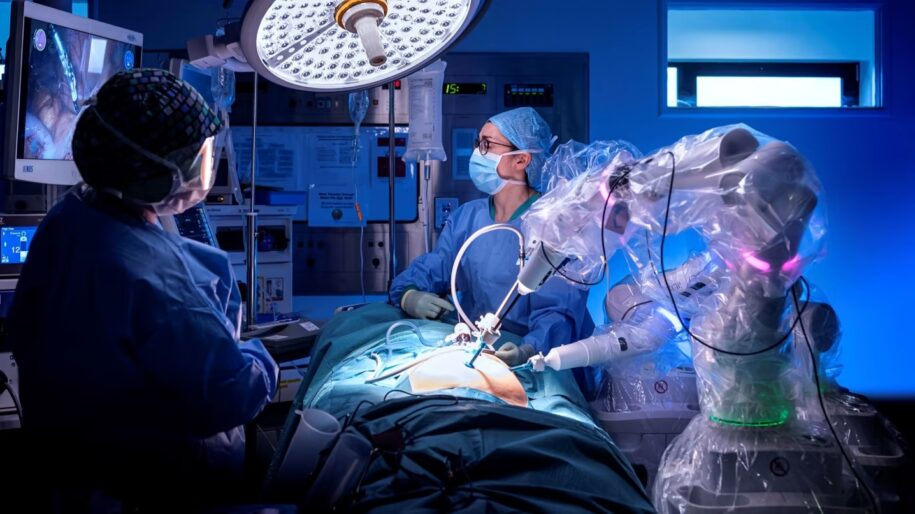
Step into an operating room today, and you might just see an unexpected team member assisting the surgeon—not a nurse or technician, but an intelligent robot. Welcome to the world of AI co-pilots—a groundbreaking fusion of robotic surgery AI and human expertise that’s transforming modern healthcare.
A New Era in the Operating Room
Let’s face it, traditional surgeries, while life-saving, weren’t perfect. Long hours, shaky hands, and complex anatomy made some procedures high-stakes gambles. Enter AI in the operating room, bringing in machine learning, real-time feedback, and robotic precision to support human skill, not replace it.
What Is an AI Co-Pilot in Surgery?
Think of it as a GPS for surgeons—except smarter. These intelligent robots assist by analyzing vast surgical data, guiding tools with extreme accuracy, and even alerting doctors in real time when things seem off. The human surgeon still leads, but the surgical precision technology means no tremors, no fatigue, and far better consistency.
The Problem: Human Error and Surgical Limitations
Surgical errors are more common than we’d like to admit. Studies show that over 4,000 preventable surgical mistakes happen annually in the U.S. alone. Even the best-trained hands are human—and humans get tired. They can’t process millions of data points mid-surgery like machines can.
The Action: Integrating AI into Surgical Procedures
So, how did we fix this? By training AI systems with historical surgical videos, patient data, and complication patterns. These co-pilots learn fast—really fast. Inside the OR, they track vitals, predict complications, and suggest micro-adjustments in real time. That’s human-machine collaboration in healthcare at its best.
The Solution: Intelligent Human-Machine Collaboration
This isn’t about robots taking over—it’s about giving surgeons superpowers. With advanced medical robotics, the scalpel moves with micro-millimeter precision. The AI analyzes each second of the procedure and helps avoid complications. For patients, this means smaller incisions, less blood loss, and faster recovery.
Results: Improved Outcomes and Patient Safety Metrics
In hospitals using this tech, surgical errors have dropped by 35%, and recovery times are 20% shorter. Imagine going home in 3 days instead of 6 after a major procedure. That’s the power of patient safety innovation through AI.
Behind the Innovation: How PeopleLabs Is Shaping the Future
One name to watch? PeopleLabs. They’re not just following trends—they’re setting them. By designing AI co-pilot systems customized for different specialties, from cardiology to orthopedics, they’re putting intelligent robotics into the hands of real-life heroes: the surgeons.
Challenges and Ethical Considerations
But hey, it’s not all smooth sailing. What if the AI makes the wrong call? Can we trust a machine with life-or-death decisions? Plus, we must consider patient data privacy and the fear that machines might eventually edge out humans entirely. So, while the tech is thrilling, ethics must keep pace.
Conclusion: Embracing the Future of AI-Driven Surgery
The operating room is no longer just a place of scalpels and stitches—it’s becoming a digital cockpit. With the AI co-pilot in play, surgery is smarter, safer, and more precise. It’s not about man vs. machine, but man and machine, working together to save lives with newfound precision.
FAQs
1. What is the main role of AI in robotic surgery?
AI guides surgical tools, analyzes patient data in real-time, and supports surgeons with decision-making insights during procedures.
2. Are AI-assisted surgeries safer than traditional surgeries?
Yes, studies show fewer complications, reduced blood loss, and quicker recoveries with AI-assisted procedures.
3. How does AI improve patient outcomes?
By providing real-time analytics, minimizing human error, and enabling highly precise movements during surgery.
4. Is there any risk of machines replacing human surgeons?
Not in the near future. AI is designed to assist, not replace. Human judgment remains essential.
5. What makes PeopleLabs’ innovations stand out in this field?
PeopleLabs focuses on tailored AI solutions for different surgical fields, emphasizing safety, real-time collaboration, and innovation that integrates seamlessly with human expertise.
Leave a Reply